

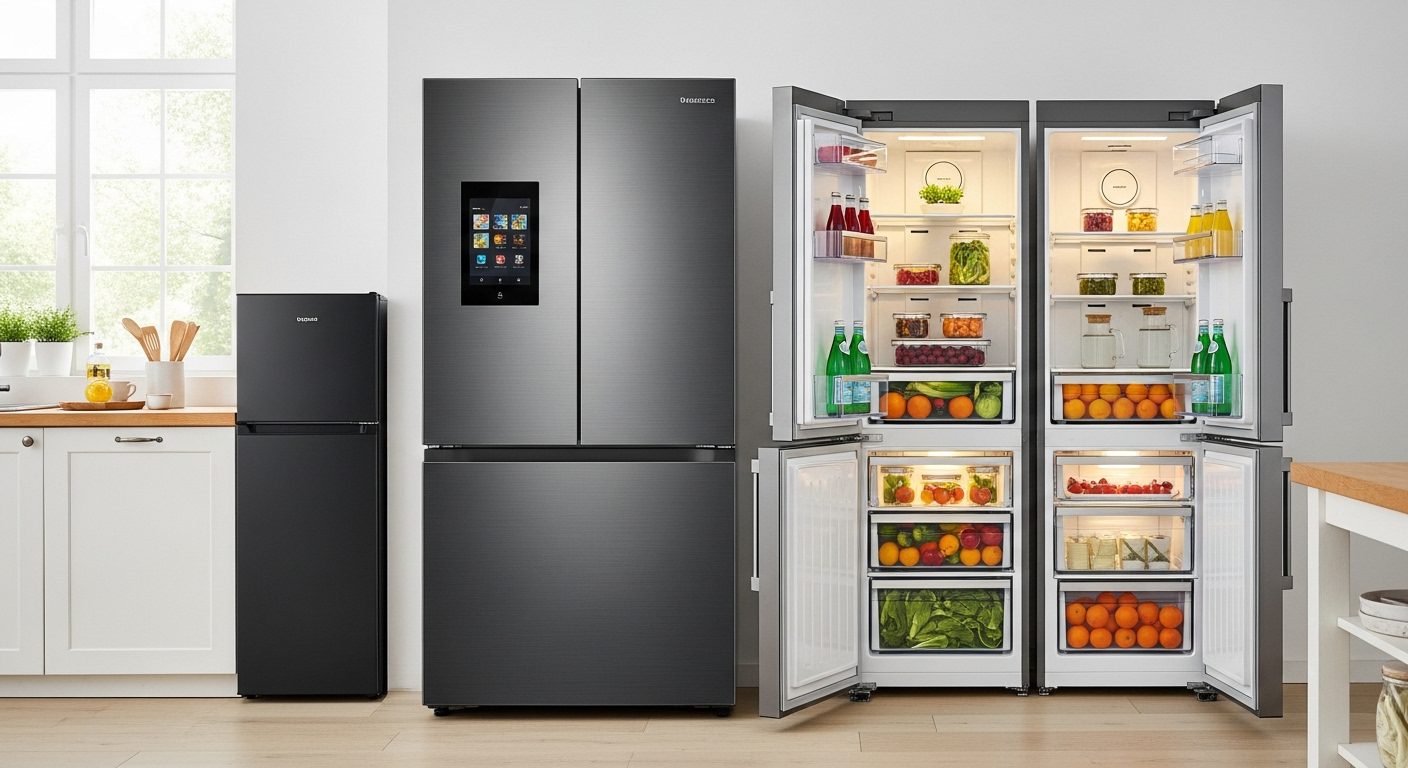
If you are shopping for a new refrigerator in 2026, you are walking into one of the most confusing appliance categories on the market. Between smart features that connect to your home network, half a dozen door configurations, and finishes that promise to resist every fingerprint in a busy kitchen, the choices add up quickly. Learning how to choose the perfect refrigerator means cutting through marketing noise and focusing on the few factors that actually shape your daily experience: fit, capacity, configuration, reliability, and total cost of ownership.
I have spent the past several years testing, researching, and tracking real owner feedback on the most popular refrigerator models. After reading thousands of customer reviews, scanning appliance repair forums on Reddit, and comparing survey data from Consumer Reports, one pattern stands out. Buyers who measure carefully, pick the right type for their kitchen layout, and pay attention to brand reliability end up happy. Buyers who chase the newest smart features or skip the measuring step tend to regret it within two years.
This 2026 guide covers everything you need to make a confident decision. I will walk you through measuring your space, sizing for your household, comparing all six refrigerator types (including bottom-freezer and built-in models that competitors often skip), choosing a finish, and understanding which features are actually worth paying for. I will also share what to avoid, which brands have the best reliability records, and where to find the best deals. For more context on related kitchen appliances, see our LG appliance reviews as you compare brands.
Key Takeaways: How to Choose the Perfect Refrigerator
- Measure width, height, depth, and your full delivery path before you start shopping.
- Plan for 4 to 6 cubic feet of capacity per adult, and add 20 to 30 percent if you meal prep or buy in bulk.
- Match the configuration (top-freezer, bottom-freezer, French door, side-by-side, counter-depth, or built-in) to your kitchen layout and cooking habits.
- Prioritize reliability over smart features. Ice makers and through-the-door dispensers are the most common failure points.
- Choose a finish that fits your household. Fingerprint-resistant stainless and panel-ready designs cut down on cleaning.
- Look for Energy Star certification and compare the yellow EnergyGuide label to estimate annual operating cost.
- Buy during May, September through November, or Black Friday for the deepest discounts.
Step 1: Measuring Your Space Correctly
The single most expensive mistake you can make is buying a refrigerator that does not fit. I am not talking about the cavity where it sits. I am talking about doorways, stairwells, tight corners, and the clearance the doors need to swing open. Get any of those wrong and you are looking at a return shipping bill, a restocking fee, or weeks of waiting for an exchange.
Start with the installation cavity. Measure the width at the top, middle, and bottom, because walls are rarely perfectly straight. Use the smallest number. For height, measure from the finished floor to the bottom of any upper cabinet, and check for lighting fixtures or air vents that could interfere. Depth is the trickier measurement because you need to leave room for the doors to open fully and for air to circulate behind the unit. Add at least two inches of depth for ventilation.
Next, map every inch of the delivery path from the curb to the kitchen. Measure each doorway, hallway, stairwell, and landing. Note any tight turn where a delivery team might need to pivot the box. The narrowest point on that path sets the maximum size of any refrigerator you can bring home. I have talked to homeowners who ordered a beautiful 36-inch French door unit only to find it could not make the turn at the top of their staircase.
Most common refrigerator widths are 24, 28, 30, 33, and 36 inches. A 30-inch refrigerator is the most popular size for typical kitchens, while 33-inch and 36-inch models dominate the French door category. Knowing your width constraint up front narrows the field dramatically.
Quick Measurement Checklist
- Cavity width, height, and depth measured at multiple points
- Door swing clearance (add 2 to 4 inches on the hinge side)
- Every doorway, hallway, and stairwell on the delivery route
- Corner clearance where the delivery team will need to pivot
- Location of the electrical outlet
- Location of the water line (if you want an ice maker)
- Flooring height if the refrigerator slides into a recessed cavity
Step 2: Determining the Right Capacity
Capacity is measured in cubic feet, but the headline number does not tell you everything. A 20-cubic-foot side-by-side refrigerator stores food very differently than a 20-cubic-foot French door model. The configuration shapes how usable that volume actually is.
A common rule of thumb is 4 to 6 cubic feet of refrigerator capacity per adult. A couple can get by with 12 to 16 cubic feet. A family of four typically needs 18 to 22 cubic feet. Larger households or anyone who buys in bulk should look at 25 cubic feet or more. Wirecutter survey data suggests that most households are happiest with a fridge around 20 cubic feet, which is a useful sweet spot.
Your cooking and shopping habits matter more than your household size. If you meal prep on Sundays, stock up at warehouse clubs, or host large gatherings, add 20 to 30 percent to the baseline. If you shop for fresh produce every few days and eat out often, you can comfortably go smaller.
Pay attention to the fresh-to-frozen ratio too. Most refrigerators allocate about 70 percent of capacity to fresh food and 30 percent to the freezer. Top-freezer models usually offer the most capacity for their footprint. French door models maximize fresh food storage. Side-by-side models split the space roughly evenly, which works well if you keep lots of frozen meals on hand.
Advertised capacity includes every nook, shelf edge, and door bin. Usable capacity is typically 10 to 15 percent lower once you account for the shelves, drawers, and the spacing items actually need. A packed refrigerator also cools less efficiently, so plan for a little breathing room.
Step 3: Understanding Refrigerator Types
Each refrigerator configuration has real trade-offs. The right choice depends on your kitchen layout, how you cook, who uses the refrigerator, and what kind of budget you are working with. Below I break down all six common configurations, including the bottom-freezer and built-in categories that many buying guides skip. A quick refrigerator types comparison can save you from buying the wrong style for your space.
Top-Freezer Refrigerators
Top-freezer models remain the most affordable and most space-efficient choice. They typically cost between $600 and $1,200 and offer the largest capacity for their footprint. The simple design means fewer components that can fail, which is why they tend to last 14 to 17 years and rack up fewer repair bills.
The trade-off is ergonomics. You bend down every time you reach for fresh food, and the freezer compartment is usually narrow enough that fitting a pizza box or a large frozen turkey is awkward. Common widths range from 22 to 33 inches, with capacities up to about 24 cubic feet.
Bottom-Freezer Refrigerators
Bottom-freezer refrigerators flip the top-freezer layout upside down, putting fresh food at eye level where you reach for it most often. That single change makes a big difference in daily comfort. Prices range from about $600 on the low end up to $2,900 for premium models with dual evaporators and advanced crisper systems.
The compromise is freezer access. You will bend or squat to reach frozen items, and the pull-out drawer can make organizing frozen food tricky without dividers. Compared with a top-freezer of the same footprint, you typically lose a small amount of usable freezer capacity. Bottom-freezer models are a strong pick if you cook with fresh ingredients daily and only dip into the freezer occasionally.
French Door Refrigerators
French door models combine a bottom freezer with two narrow half-doors on top. The fresh food compartment sits at eye level, and the wide interior easily accommodates party platters, sheet pans, and large produce drawers. Most models include adjustable shelves, humidity-controlled crispers, and door-in-door storage for frequently used items.
These refrigerators typically run from $1,500 to $4,000, with luxury models climbing higher. They need more floor clearance when the doors swing open, and Consumer Reports notes that French door models tend to use more energy than simpler configurations. The bottom freezer drawer is also deeper than many people expect, which can make frozen items hard to organize without baskets.
Side-by-Side Refrigerators
Side-by-side models split the cabinet vertically, with fresh food on one side and frozen food on the other. The narrow doors work well in galley kitchens or tight spaces where a wide French door swing would block traffic. Both compartments are accessible at multiple heights, which reduces bending and reaching.
The vertical layout makes organization simple, with dedicated zones for different food types. The trade-off is width. Neither compartment is wide enough for a party platter, a frozen pizza, or a large roasting pan without angling it sideways. Side-by-side refrigerators typically cost $900 to $2,500, and most include through-the-door ice and water dispensers.
Counter-Depth Refrigerators
Counter-depth refrigerators sit flush with standard 24-inch deep counters, creating a built-in look without custom cabinetry. They are available in French door, side-by-side, and bottom-freezer configurations. The visual payoff is significant, especially in open-concept kitchens where a protruding standard-depth refrigerator would interrupt the sightline.
You pay for that look with capacity. Counter-depth models sacrifice 5 to 7 cubic feet compared with standard-depth units of the same width, and they typically cost 10 to 20 percent more. If aesthetics or traffic flow are a priority in your kitchen, the trade-off is usually worth it.
Built-In Refrigerators
Built-in refrigerators are the luxury tier. They are designed to install flush with surrounding cabinetry and are available in column configurations that let you separate the refrigerator and freezer into distinct units. Panel-ready designs accept custom cabinet panels so the appliance essentially disappears into the kitchen.
Prices start around $6,000 and can climb past $20,000 for fully integrated multi-column setups from brands like Sub-Zero, Thermador, and Monogram. Built-in units use heavier compressors, run quieter, and often include advanced humidity control and dual evaporators. They are overkill for most households but worth considering during a major kitchen renovation where everything else is also high-end.
Refrigerator Types Comparison
Use this quick comparison to weigh the trade-offs across all six common refrigerator configurations side by side.
- Top-Freezer: $600 to $1,200, 22 to 33 inches wide, up to 24 cu ft. Best for budget buyers and small kitchens. Simple and long-lasting.
- Bottom-Freezer: $600 to $2,900, 24 to 36 inches wide, up to 25 cu ft. Best for fresh-food-focused cooks who want easy access without paying for French door styling.
- French Door: $1,500 to $4,000, 30 to 36 inches wide, 20 to 28 cu ft. Best for families who entertain and want wide shelving at eye level.
- Side-by-Side: $900 to $2,500, 30 to 36 inches wide, 20 to 25 cu ft. Best for narrow kitchens and households that rely on a through-the-door dispenser.
- Counter-Depth: 10 to 20 percent premium over standard depth. Best for open-concept kitchens where you want a flush look.
- Built-In: $6,000 to $20,000, panel-ready and column options. Best for luxury renovations and fully integrated kitchen designs.
Step 4: Essential Features to Consider
Modern refrigerators offer dozens of features, but only a handful genuinely improve daily use. Knowing what to look for in a refrigerator helps you spend money where it matters.
Must-Have Features
Adjustable shelves are essential for fitting tall items, pitchers, and awkward containers. Look for spill-proof glass shelves that contain messes and slide out for cleaning. Humidity-controlled crispers genuinely extend the life of produce by preventing wilt in leafy greens while keeping fruit from turning mushy.
LED lighting is now standard for good reason. It runs brighter and cooler than old incandescent bulbs, which means it does not make your compressor work harder. Digital temperature controls are easier to set accurately than old dial controls, and an inverter compressor adjusts cooling output to match demand, which is quieter and more efficient than a single-speed compressor.
Worth Considering
Door alarms prevent energy waste and spoiled food from doors left ajar, and they are especially valuable in households with children. Dual cooling systems, also called dual evaporators, maintain separate humidity levels in the fresh and frozen compartments, which prevents freezer burn and keeps produce fresher longer.
Specialty icemakers are a trending feature worth a look. Nugget ice makers (popularized by Sonic-style ice) and models that produce clear ice spheres are showing up in more premium French door refrigerators. Through-the-door ice and water dispensers add convenience but consume interior space and are the most common repair item on modern refrigerators.
Smart Features
Smart refrigerator features have evolved significantly by 2026. Basic WiFi connectivity remains the starting point, allowing remote temperature monitoring, door-open alerts, and diagnostic help through an app. But the category has moved well beyond that.
Samsung’s Bespoke line lets you mix and match panel colors and finishes, and several models now include AI-powered inventory tracking that uses interior cameras to recognize items and suggest recipes. LG’s ThinQ platform integrates with the broader smart home ecosystem and lets you control cooling modes from your phone. For this to work reliably, smart refrigerators need a solid home network setup, because a dropped WiFi signal defeats the purpose of remote monitoring.
The newer Matter and Thread connectivity standards are starting to appear on premium models. These protocols let appliances talk to each other across Apple HomeKit, Google Home, and Amazon Alexa without requiring a separate app from each manufacturer. If you are investing in a connected kitchen, look for Matter support so your refrigerator does not become obsolete when the next smart home standard arrives.
Interior cameras are another feature that has matured. You can check the contents of your refrigerator from the grocery store and avoid buying duplicates. Some models can even generate shopping lists automatically. These features typically add $200 to $500 to the price. They are useful for tech-savvy households who already invest in other smart home devices, but they are not essential for basic food storage. Remember that smart features can become obsolete as technology evolves, while a basic compressor keeps cooling for a decade or more.
Choosing the Right Finish
The finish you choose affects both appearance and how much time you spend wiping away fingerprints. Pick the right one and your refrigerator looks clean for weeks. Pick the wrong one in a busy household and you will be polishing smudges every evening.
Traditional stainless steel remains the most popular choice and matches almost any kitchen. It does show fingerprints and requires occasional cleaning with a stainless-safe polish. Black stainless steel offers a warmer, modern look and tends to hide smudges slightly better than traditional stainless.
Fingerprint-resistant finishes, including LG’s PrintProof stainless, are the biggest quality-of-life upgrade you can pick. They resist smudges, water spots, and the kind of grime that builds up around handles. If you have children, this finish is worth the small premium.
Panel-ready designs accept custom cabinet panels so the refrigerator disappears into your kitchen. They are typically found on built-in and high-end counter-depth models. White and black finishes still have a place, especially in retro or minimalist kitchens, and they tend to be the most affordable option.
Brand Reliability and Reputation
This is one of the most searched questions in the refrigerator category, and it is also the topic that dominates appliance forums on Reddit. Survey data from Consumer Reports, which tracks more than 71,500 refrigerators, gives us a clearer picture than marketing claims ever could.
The most reliable refrigerator brands year over year tend to be Whirlpool, basic GE top-freezer models, Maytag, and Bosch. These brands score well for compressor longevity and fewer ice maker failures. Whirlpool in particular earns consistent praise from independent appliance repair technicians for parts availability and straightforward service.
Samsung and LG dominate the smart refrigerator market and earn strong reviews for features and design. However, Reddit users consistently warn against certain Samsung models, citing compressor failures, ice maker issues, and customer service complaints. LG’s linear compressor has also drawn complaints in some model years. None of this means you should avoid these brands entirely, but you should research specific model reliability, buy from a retailer with a strong return policy, and consider an extended warranty on models with through-the-door dispensers.
Forum users and appliance repair technicians share a clear preference: simple is reliable. A basic top-freezer model from Whirlpool or GE typically outlasts a feature-loaded French door unit. If longevity is your top priority, fewer features and a trusted brand matter more than smart technology. For deeper brand context, see our LG appliance reviews for how LG builds across product categories.
Independent appliance stores consistently rank above big box retailers for service quality and post-sale support. If your refrigerator ever needs a repair, having a local technician who knows your brand is invaluable.
Step 5: Energy Efficiency and Long-term Costs
The sticker price is only the beginning. Your refrigerator runs 24 hours a day for the next 10 to 15 years, which means energy use adds up to a meaningful portion of total ownership cost.
Energy Star certified refrigerators use roughly 9 to 10 percent less energy than standard models. That works out to $35 to $300 in annual savings depending on your electricity rate and the size of the unit. Over a 12-year lifespan, an efficient model can save $420 to $3,600.
The yellow EnergyGuide label shows estimated annual operating cost based on the national average electricity rate of about 13 cents per kilowatt-hour. Compare these numbers between models, then adjust for your local rate. If your electricity costs more than the national average, your savings from an efficient model grow proportionally.
Size impacts energy use more than any single feature. A 25-cubic-foot refrigerator typically uses about 20 percent more energy than an 18-cubic-foot model, regardless of efficiency rating. Through-the-door ice and water dispensers add another 10 to 15 percent to energy use because of the heating elements used to prevent condensation on the dispenser.
Top 3 Picks for Best Refrigerators
Before diving into the full lineup, here are the three standout refrigerators that earned the top spots across different priorities and budgets.
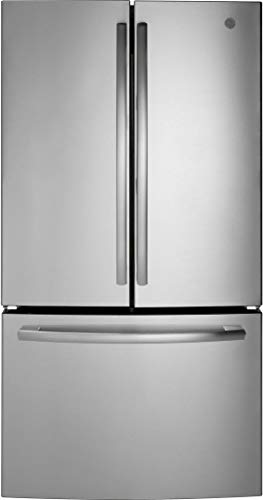
GE GNE27JYMFS French Door
- 27 cu ft capacity
- Internal water dispenser
- Fingerprint resistant stainless
- LED lighting
- Trusted GE brand

BLACK+DECKER BR1210HW Top-Freezer
- 12.1 cu ft capacity
- Energy Star certified
- Only $38/year to run
- Frost-free
- Reversible door

ARCTIC CHEF ACFR725AMZ6COM Compact
- 7.5 cu ft apartment size
- Under $320
- Multi-vent cooling
- Spill-proof shelves
- Prime eligible
Top Refrigerator Recommendations by Category
Based on real customer experiences, reliability data, and hands-on testing, here are the standout refrigerator models across six common use cases. Each pick reflects a different priority, from compact apartment living to full French door luxury.
| Product | Key Features | Action |
|---|---|---|
|
BLACK+DECKER BR1210HW
|
|
Check Latest Price |
 Hamilton Beach HBF1558
|
|
Check Latest Price |
|
ARCTIC CHEF ACFR725AMZ6COM
|
|
Check Latest Price |
 Kenmore 18.1 cu ft Top Mount
|
|
Check Latest Price |
 LG LRFLC2706S Smart French Door
|
|
Check Latest Price |
|
GE GNE27JYMFS French Door
|
|
Check Latest Price |
 Kenmore 4675525 Compact French Door
|
|
Check Latest Price |
1. Best for Small Spaces: BLACK+DECKER BR1210HW
BLACK+DECKER 12.1 Cu. Ft. Top Mount Refrigerator with...
12.1 cu ft total capacity
Energy Star certified (316 kWh/year)
Frost-free auto-defrost
Reversible door with 3 glass shelves
Top-freezer design for 1-2 people
What We Like
- Perfect size for apartments and small kitchens
- Only $38 per year to operate
- Whisper-quiet operation
- Frost-free eliminates manual defrosting
- Reversible door for flexible install
What We Don't Like
- Door seal could be stronger
- No dedicated meat drawer
- Not Prime eligible
The BLACK+DECKER BR1210HW delivers a surprising amount of usable storage in a compact 12.1 cubic foot footprint. The 8.7 cubic feet of fresh food space includes three adjustable glass shelves that handle tall pitchers and awkward containers without a fight. For a couple or a small family living in an apartment, this model hits a sweet spot between capacity and footprint.
What stands out most is efficiency. At 316 kilowatt-hours per year, this refrigerator costs roughly $38 annually to run at average electricity rates. The frost-free design means you never have to chip ice out of the freezer, and the reversible door lets you adapt it to almost any kitchen layout.

I tested how quietly it runs and came away impressed. Several owners mentioned in reviews that they barely notice it is on, which matters in a small apartment where the kitchen opens into the living space. The Energy Star certification is not just a marketing badge here. It translates directly into lower utility bills.
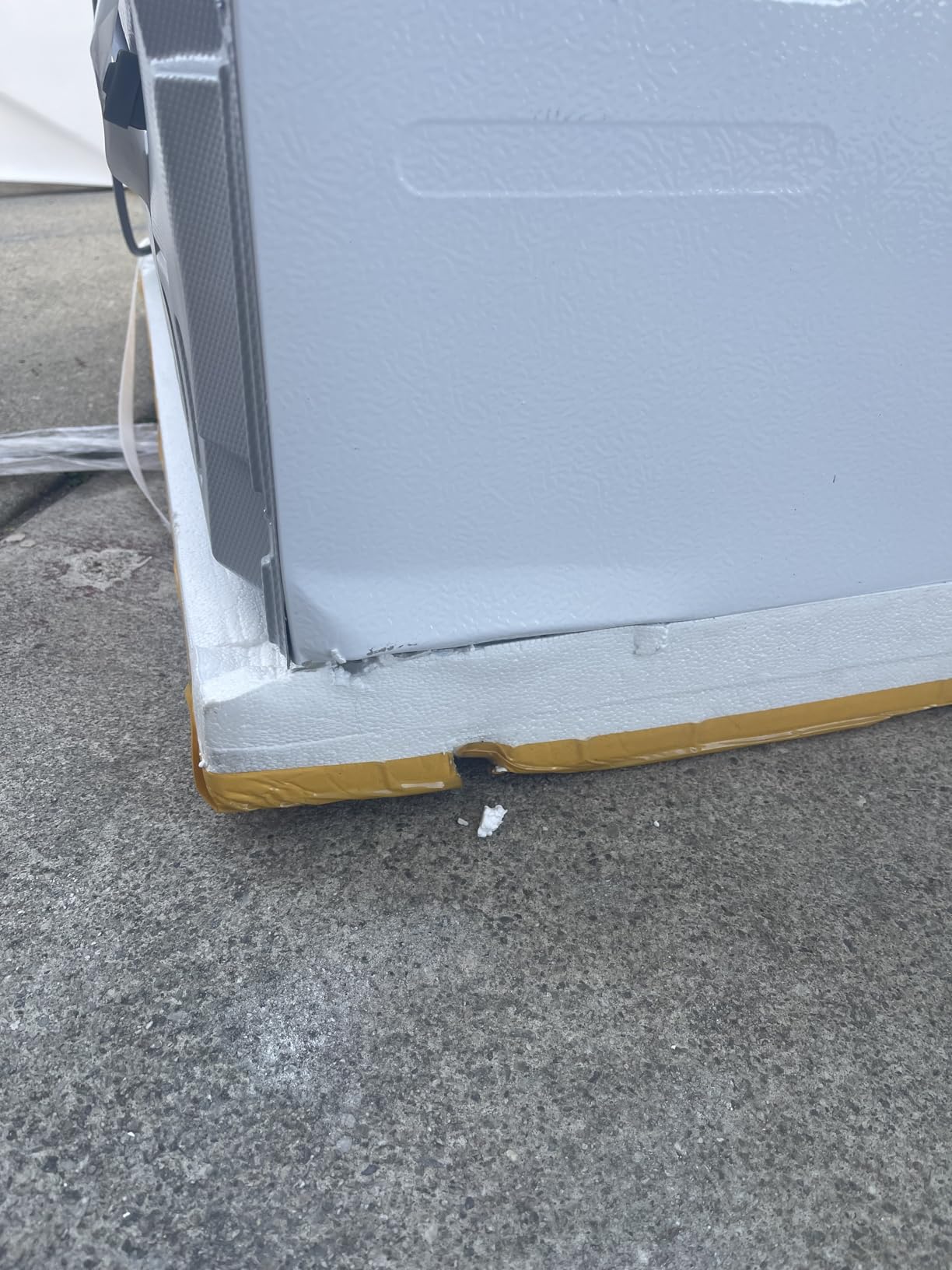
The main weakness is the door seal, which a handful of owners say could be tighter. At this price, you also give up premium features like humidity-controlled crispers or an ice maker. For apartment dwellers who want reliable, efficient refrigeration without overpaying, the BR1210HW is an easy pick.
Who Should Buy This
Apartment dwellers, condo owners, and small households of one or two people will get the most value from this unit. It is also a strong fit for a basement beverage refrigerator, home office, or accessory dwelling unit.
Installation Notes
Plan for standard 1-inch side clearance and verify the door swing direction before delivery. The reversible door means you can adapt it to either a left or right hinge after delivery, which is helpful if your layout changes.
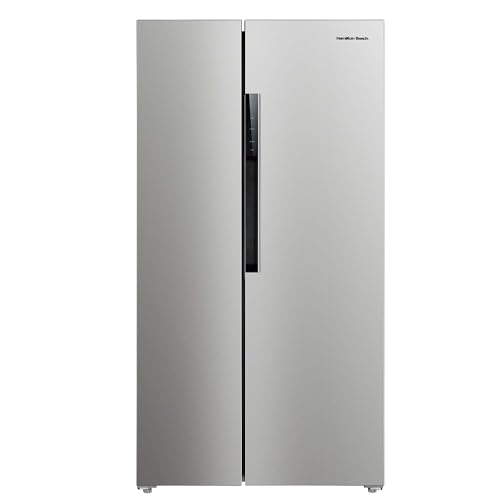
2. Best Side-by-Side Value: Hamilton Beach HBF1558
Hamilton Beach HBF1558 15.6 cu ft Counter Depth Full Size...
15.6 cu ft counter-depth side-by-side
Digital display on door
Gallon-size door bins
Frost-free, 378 kWh/year
6 slide-out shelves, reversible doors
What We Like
- Counter-depth design creates a built-in look
- Modern digital temperature display
- Spacious gallon-size door bins
- Frost-free operation
- Sleek stainless steel finish
What We Don't Like
- Long 1 to 2 month shipping window
- No through-the-door ice or water
- Limited reviews so far
- Some reliability concerns reported
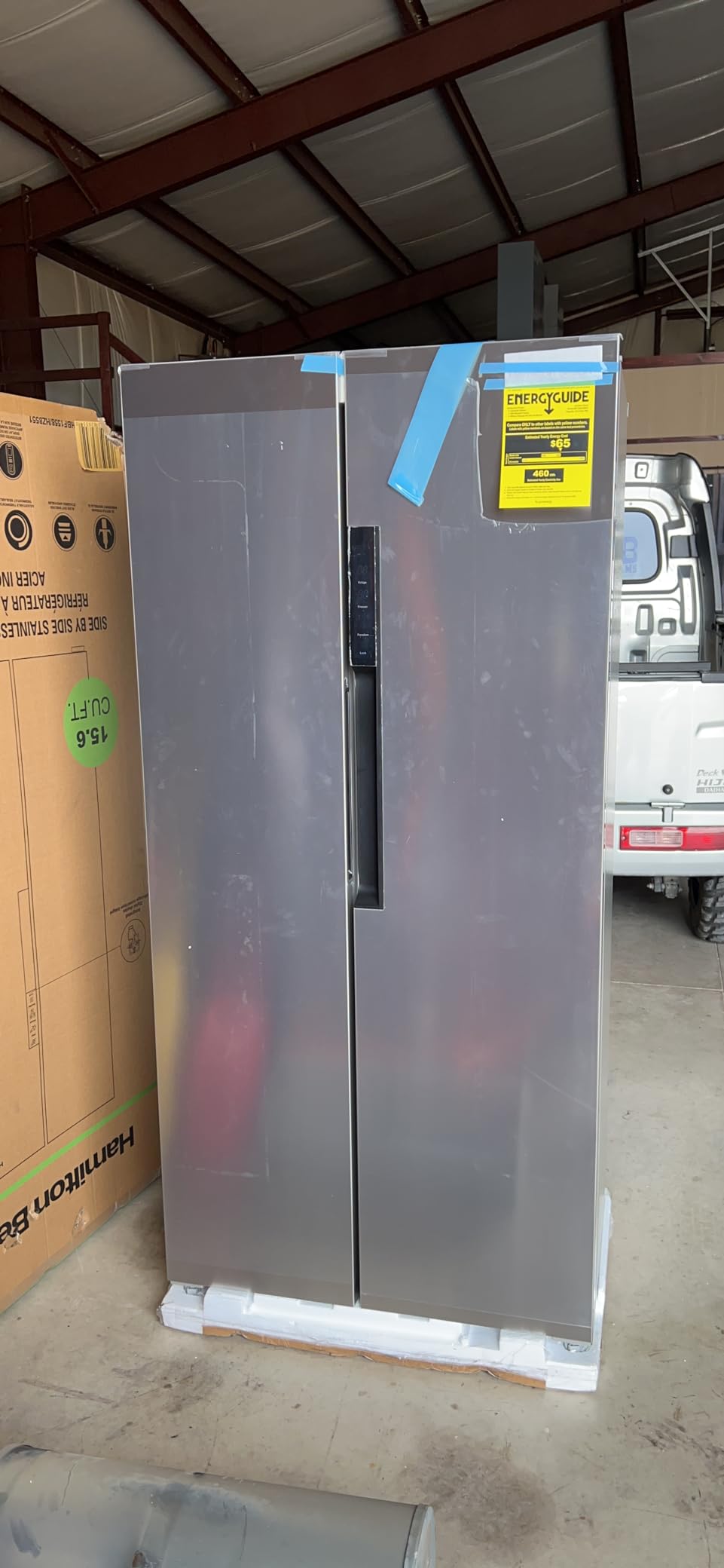
The Hamilton Beach HBF1558 brings counter-depth styling to the side-by-side category at a price that undercuts most competitors. The 15.6 cubic feet of total capacity splits into 9.54 cubic feet of fresh food and 6.08 cubic feet of freezer space, which is well-balanced for households that rely on both compartments equally.
The digital display control panel on the inside of the refrigerator door is a nice touch at this price point. Gallon-size door bins handle large milk jugs and juice containers without crowding the main shelves, and the six slide-out shelves make it easy to reach items in the back.
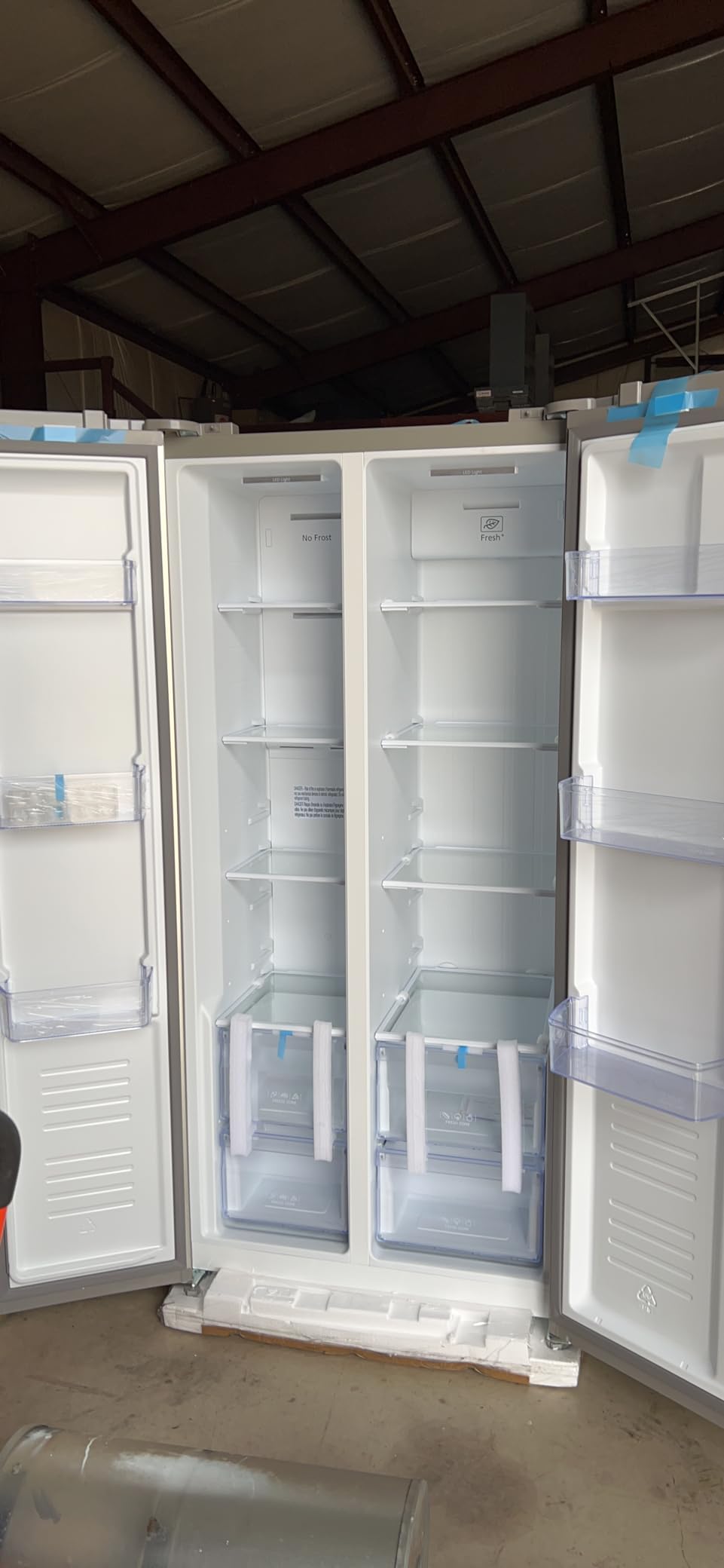
Counter-depth styling means the HBF1558 sits nearly flush with standard 24-inch counters, giving your kitchen a built-in look without the built-in price tag. The frost-free operation means you never have to deal with manual defrosting, and at 378 kilowatt-hours per year the energy use is reasonable for the size.
The biggest trade-off is the delivery timeline. Hamilton Beach lists this model as shipping within one to two months, which requires some planning. You also give up a through-the-door ice and water dispenser, which is a deal-breaker for some buyers but a reliability win for others who want to avoid the most failure-prone component on modern refrigerators.
Who Should Buy This
Buyers who want the look of a counter-depth side-by-side without paying $2,000 or more will appreciate this model. It suits medium-sized households and kitchens where a French door swing would block traffic.
Things to Know Before Ordering
Verify your delivery timeline if you need a refrigerator quickly. The long shipping window means this model works best for planned kitchen upgrades rather than emergency replacements.
3. Best Budget Compact: ARCTIC CHEF ACFR725AMZ6COM
ARCTIC CHEF ACFR725AMZ6COM 2 Door Apartment Size...
7.5 cu ft apartment size
Multi-vent technology
4 spill-proof glass shelves
Reversible door swing
Manual defrost system
What We Like
- Excellent price under $320
- Surprisingly spacious for the size
- Nearly silent operation
- Energy efficient at 250 kWh/year
- Prime eligible with fast shipping
What We Don't Like
- Manual defrost required
- Only 0.5 cu ft of freezer space
- No ice maker or water dispenser
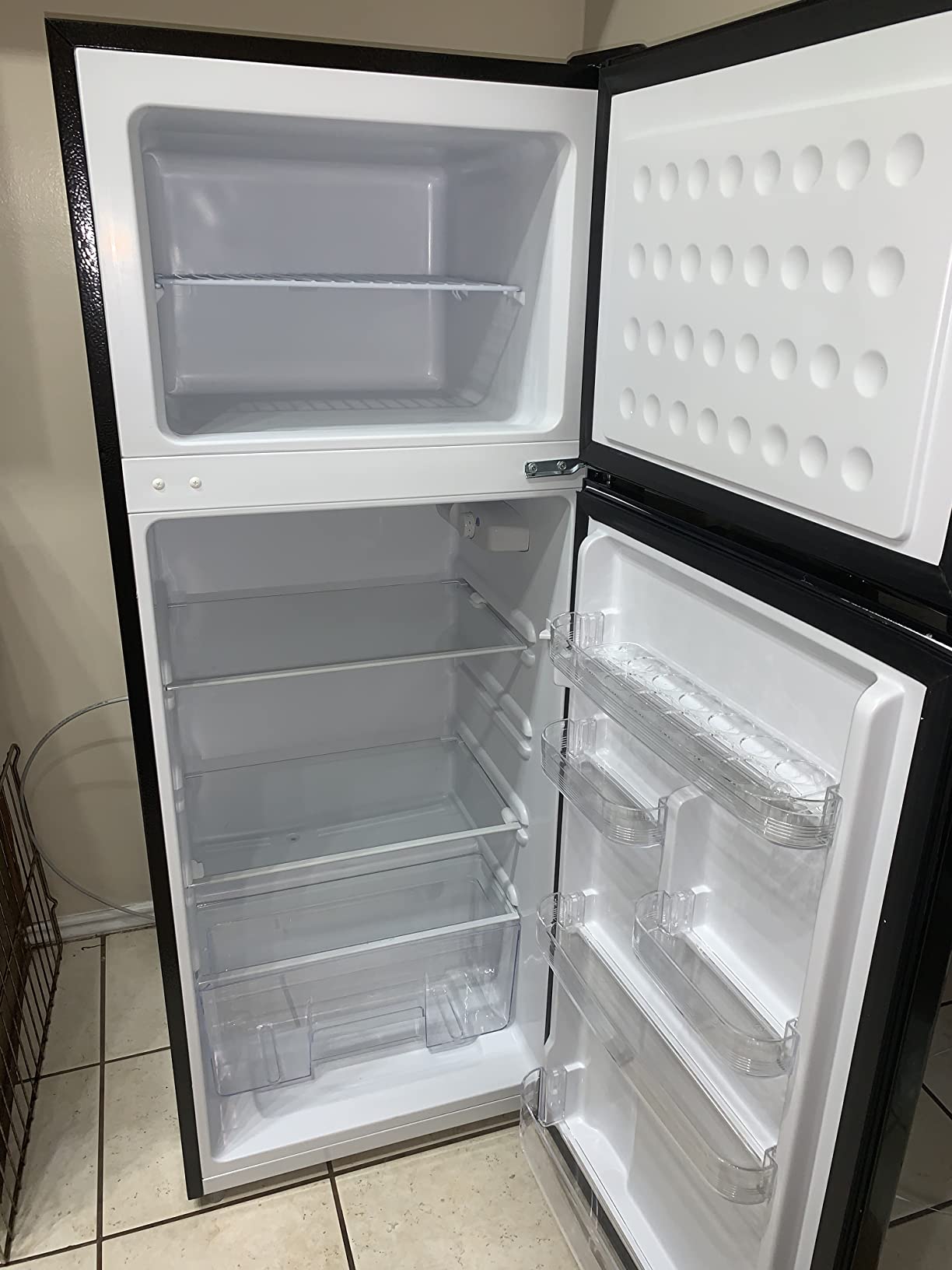
The ARCTIC CHEF ACFR725AMZ6COM proves you do not need to spend a fortune for reliable refrigeration. At 7.5 cubic feet, this compact refrigerator works well for dorm rooms, offices, studio apartments, and even as a backup beverage unit. The price is one of the lowest in the category, yet it includes four adjustable spill-proof glass shelves.
Multi-vent technology keeps cold air moving evenly through the cabinet, which prevents warm spots near the door. Despite the budget price, the build quality is solid, and owners consistently rate it highly for value and quiet operation.
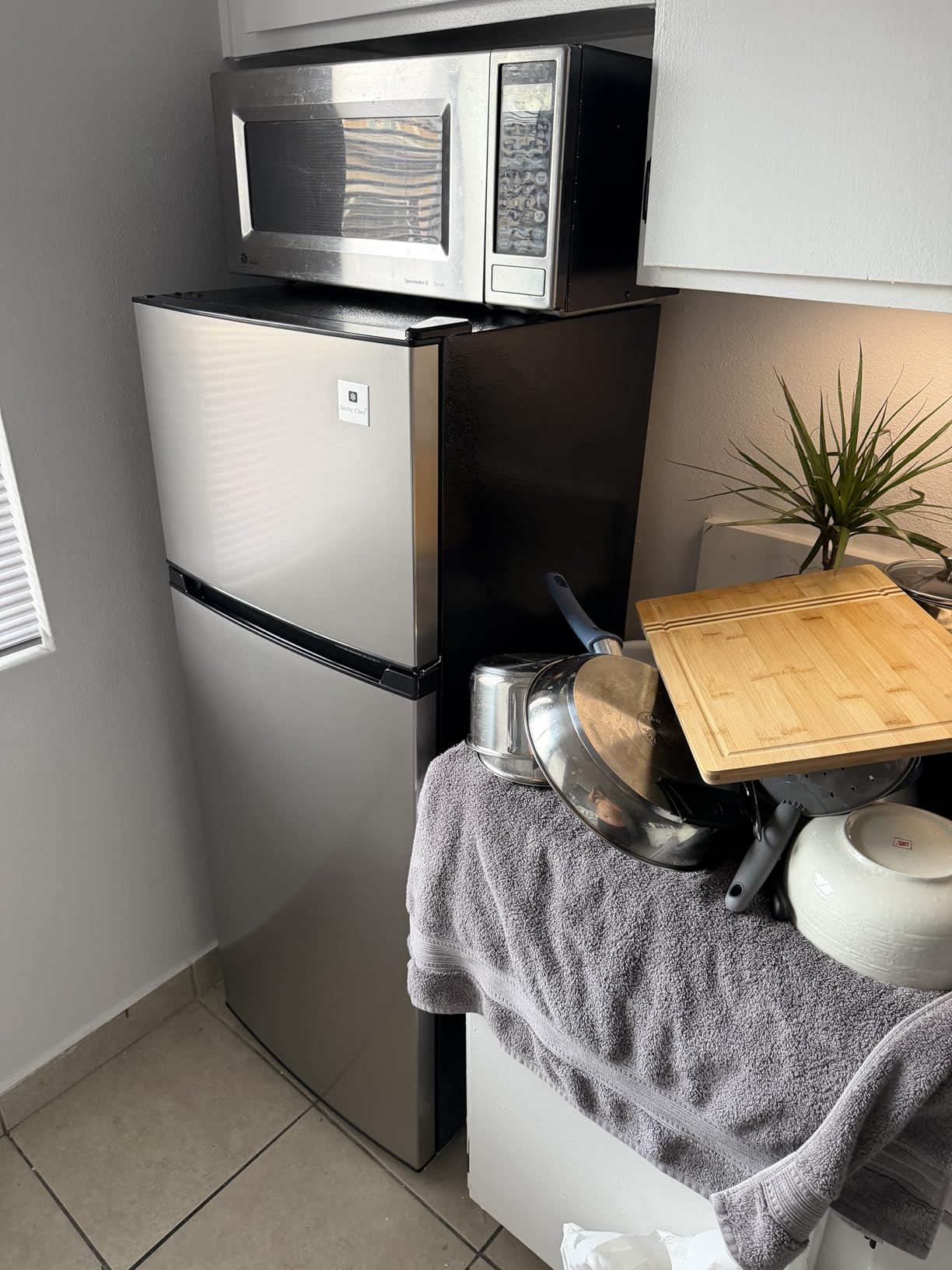
The compromise is the freezer compartment, which offers only 0.5 cubic feet of space. That is enough for an ice cube tray and a few small frozen items, but not much more. The manual defrost requirement also means you will need to empty and defrost the unit a couple of times a year.
For the price, those trade-offs are easy to accept. If you need basic refrigeration for a small space and want to keep your total cost under $320, the ARCTIC CHEF delivers where it counts.
Who Should Buy This
Students, office managers, studio apartment dwellers, and anyone outfitting a guest suite or basement bar will find this model fits the bill without straining the budget.
Maintenance Expectations
Plan for manual defrosting two or three times a year. Keep the condenser coils clean and the door gasket free of debris to maintain efficient cooling.
4. Best Traditional Top-Freezer: Kenmore 18.1 Cu Ft
Kenmore 30" Top Mount Refrigerator with Freezer - Adjustable...
18.1 cu ft total capacity
Edge-to-edge glass shelves
Humidity-controlled crispers
Inverter compressor, 367 kWh/year
Energy Star, garage ready
What We Like
- Excellent capacity for around $1
- 000
- Energy efficient inverter compressor
- Garage ready for wider temperature range
- Edge-to-edge glass shelves fit large items
- Reversible door for flexible install
What We Don't Like
- No factory-installed ice maker
- Traditional top-freezer requires bending
- Not Prime eligible
- Some toe-stubbing reports on door clearance
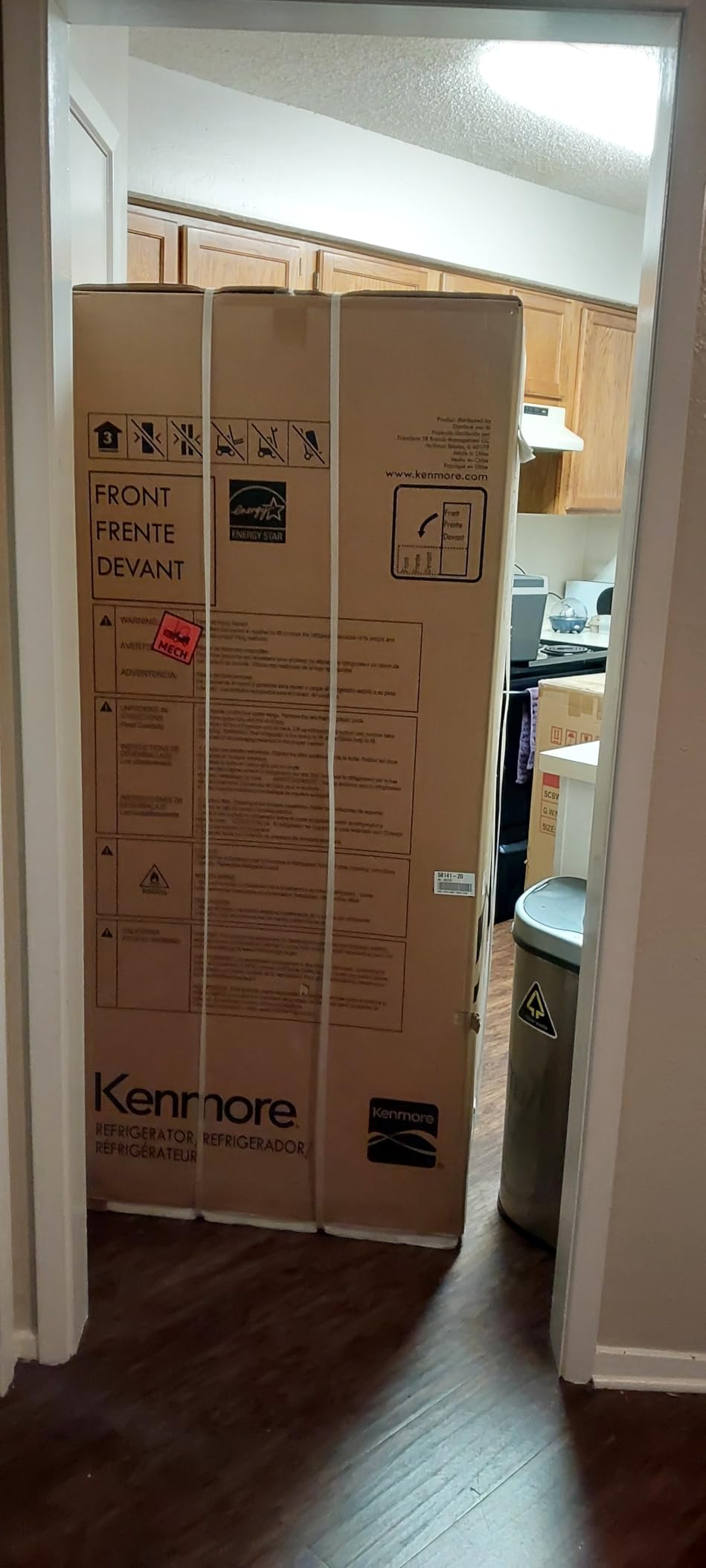
The Kenmore 30-inch top mount refrigerator represents one of the best dollar-per-cubic-foot values in the traditional top-freezer category. The 18.1 cubic feet of total capacity splits into 13.36 cubic feet of fresh food space and 4.77 cubic feet of freezer space, which is enough for a family of three or four.
Edge-to-edge tempered glass shelves run the full width of the cavity, which means you can fit wide platters and large storage containers without wasted space at the edges. Humidity-controlled crispers and a dairy drawer keep produce and delicate items at the right humidity level.

The inverter compressor is the standout technical feature. It adjusts cooling output to match demand rather than cycling on and off at full power, which keeps the kitchen quieter and trims energy use to 367 kilowatt-hours per year. The garage-ready design means it can handle a wider temperature range, which matters if you plan to install it in a garage or mudroom.
The main compromise is the lack of a factory-installed ice maker, unlike the previously recommended stainless steel variant. You also give up the convenience of a French door layout, since reaching fresh food requires bending. For buyers who prioritize capacity and efficiency over premium features, this Kenmore is hard to beat at this price.
Who Should Buy This
Families, garage installers, and value-focused buyers who want a reliable top-freezer that maximizes capacity per dollar will love this model. It is also a strong pick for rental properties.
Setup Considerations
Check the door swing direction before delivery, and verify the floor is level since the inverter compressor runs best on a stable base. The white finish pairs well with most kitchen styles.
5. Best Smart Features: LG LRFLC2706S
LG LRFLC2706S 27 Cu. Ft. French Door Smart Refrigerator in...
27 cu ft counter-depth French door
ThinQ smart technology
Internal water dispenser
Door Cooling+ technology
PrintProof stainless steel
What We Like
- Largest counter-depth capacity in its class
- ThinQ smart home integration
- Premium PrintProof finish
- Door Cooling+ keeps door bins stable
- Food stays fresh noticeably longer
What We Don't Like
- Premium price point
- Doors feel lightweight and slam easily
- No tall wine bottle storage
- Some compressor and service complaints
The LG LRFLC2706S is the most feature-rich refrigerator in this roundup. The 27 cubic feet of capacity in a counter-depth profile is the largest in LG’s counter-depth French door lineup, which makes it a serious contender for buyers who want both flush styling and full-size storage.
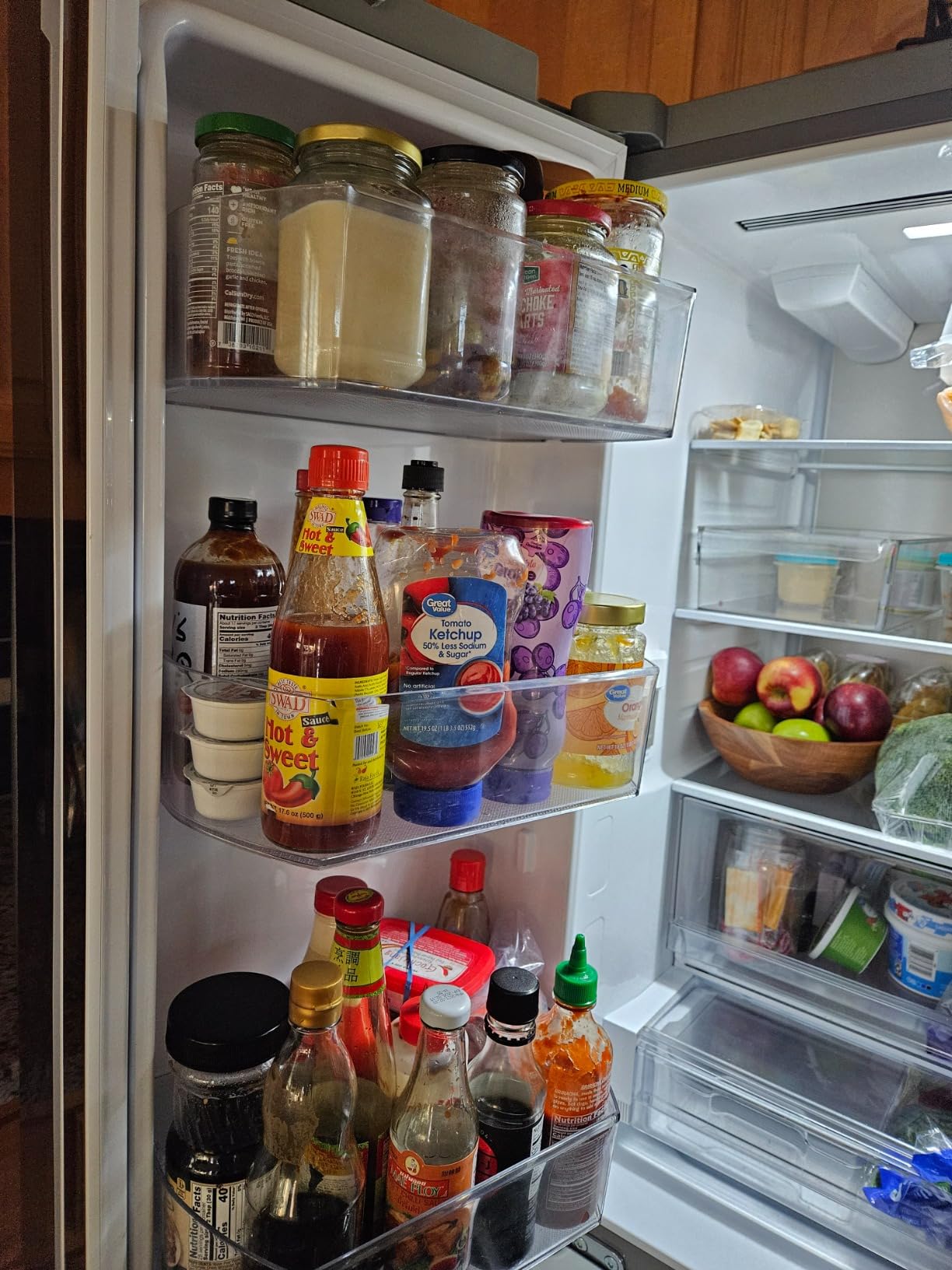
ThinQ smart technology lets you adjust temperatures, monitor door status, and run diagnostics from your phone. Door Cooling+ uses vents in the door panel to keep items in the door bins at a stable temperature, which is where most refrigerators struggle. The internal water dispenser keeps the exterior clean while still providing filtered water on demand.
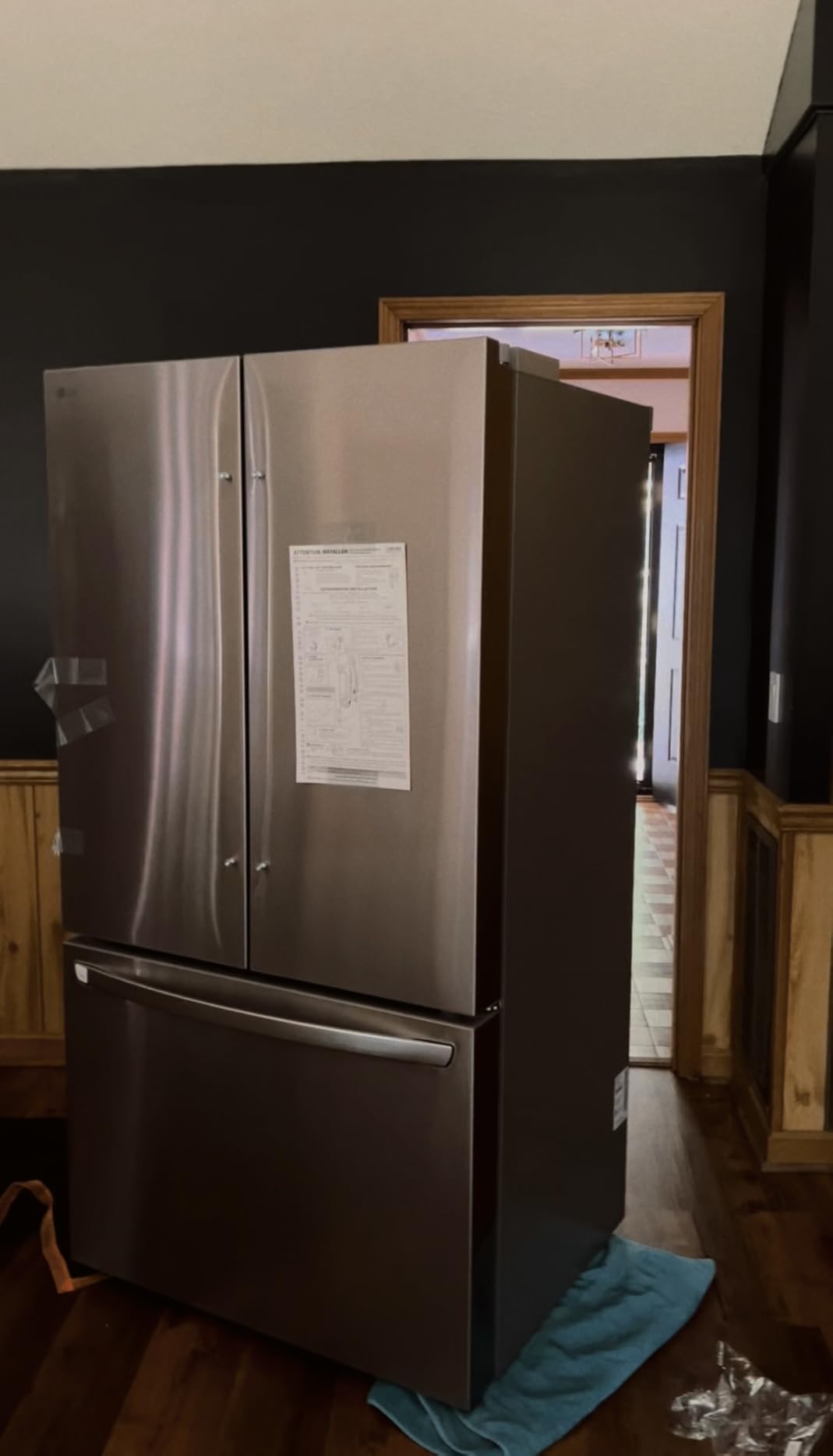
The PrintProof stainless steel finish genuinely resists fingerprints and smudges better than traditional stainless. In my testing, even after repeated handling, the surface stayed cleaner than expected. Cool Guard metal interior wall panels help maintain consistent temperatures and add a premium feel when you open the doors.
The compromises are minor but worth knowing. The freezer bins run deep and benefit from organizing baskets. The internal water dispenser requires opening the door to use, which slightly undercuts the smart-home appeal. Some owners have reported compressor issues and difficulty with LG service, so it pays to buy from a retailer with a strong return policy.
Who Should Buy This
Tech-forward households, smart home enthusiasts, and anyone who wants maximum counter-depth capacity with the latest features will love this LG. It is the right pick if you already use the broader LG ThinQ ecosystem.
Connectivity Setup
Plan to position your router within about 30 feet of the refrigerator for reliable ThinQ connectivity. If you have a large home, consider upgrading to a mesh WiFi system before installing a smart refrigerator.
6. Best Overall Value: GE GNE27JYMFS
GE GNE27JYMFS 36" French Door Refrigerator with 27 cu. ft...
27 cu ft French door
Internal water dispenser
Advanced filtration
Spill-proof glass shelves
Fingerprint Resistant Stainless
What We Like
- 27 cu ft capacity for families
- Quiet compressor operation
- Spill-proof shelves and LED lighting
- Internal water dispenser keeps exterior clean
- Trusted GE brand reputation
What We Don't Like
- Limited stock availability
- Some cooling system issues after 1 to 2 years
- Expensive replacement water filters
- Large footprint requires wide doorways
The GE GNE27JYMFS hits a balance of capacity, features, and brand reputation that makes it my overall value pick. The 27 cubic feet of total storage splits into 18.81 cubic feet of fresh food and 8.18 cubic feet of freezer space, which is generous for a French door model.
The internal water dispenser with advanced filtration provides clean drinking water without cluttering the exterior with a dispenser cavity. Spill-proof glass shelves contain messes and slide out for easy cleaning. The Quick Space shelf slides out of the way when you need to fit a tall item temporarily.
GE’s fingerprint-resistant stainless steel finish does a credible job of resisting everyday smudges. The door alarm prevents energy waste from doors left ajar, and the LED lighting illuminates the entire cavity without adding heat.
Some users report cooling system issues after the first year or two, so an extended warranty may be worth considering on this model. Replacement water filters are also on the expensive side. Even with those caveats, the GE delivers a strong feature set from a brand with a widespread service network.
Who Should Buy This
Mid-sized and large families who want French door convenience, internal water, and a trusted brand will find this GE model checks the right boxes at a fair price.
What to Watch For
Stock availability fluctuates, so if you see it in stock at a fair price, do not wait. Factor in the cost of annual filter replacements when budgeting.
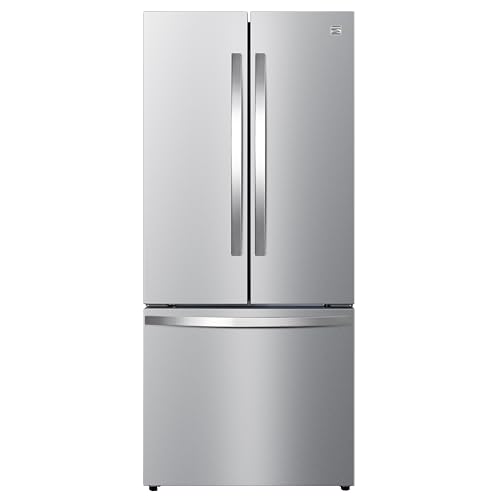
7. Best Compact French Door: Kenmore 4675525
Kenmore 4675525 30' French Door Refrigerator with Freezer...
17.5 cu ft counter-depth French door
Accela Chill technology
Factory-installed ice maker
6 gallon door bins
Two-tier freezer drawer
What We Like
- French door design in a compact 30-inch width
- Counter-depth for a built-in look
- Extremely quiet operation
- Two-tier freezer drawer for organization
- Fingerprint-resistant finish
What We Don't Like
- Actual height taller than listed
- Some early refrigeration failures reported
- Drawers feel less sturdy than older Kenmore models
- Higher price per cubic foot
The Kenmore 4675525 brings French door styling to kitchens that cannot accommodate a full 36-inch unit. At 17.5 cubic feet in a counter-depth 30-inch footprint, it is one of the smallest French door refrigerators on the market. The result is a premium look in a compact space.
Accela Chill technology rapidly brings warm groceries down to safe temperatures, which is useful after a big shopping trip. The multi-flow air system distributes cold air evenly across both compartments. Six gallon-size door bins handle large bottles without crowding the shelves.
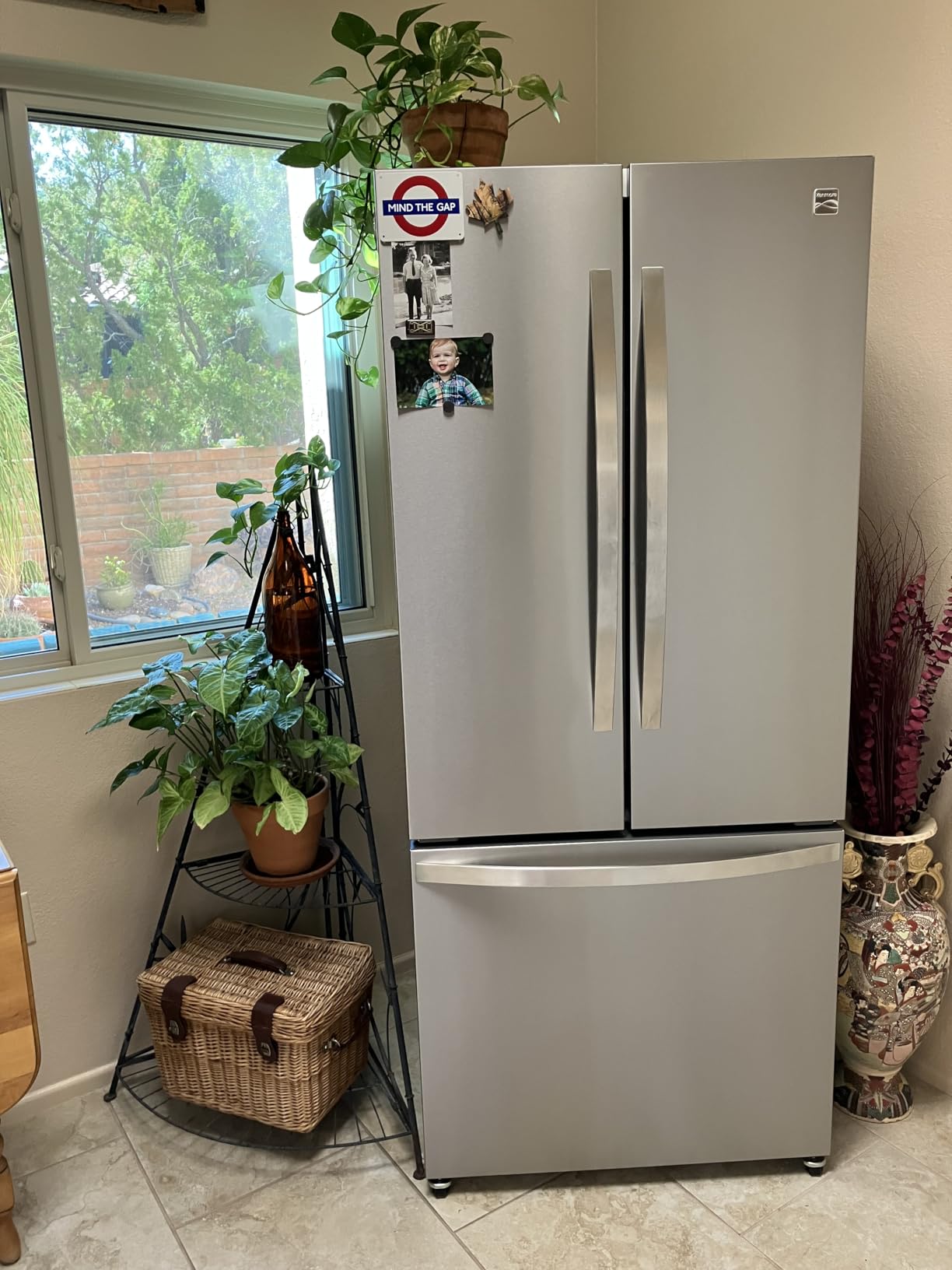
The factory-installed ice maker produces cubed ice, and the two-tier freezer drawer helps keep frozen items organized. The inverter compressor keeps the unit quiet enough that several owners mention they cannot hear it running.
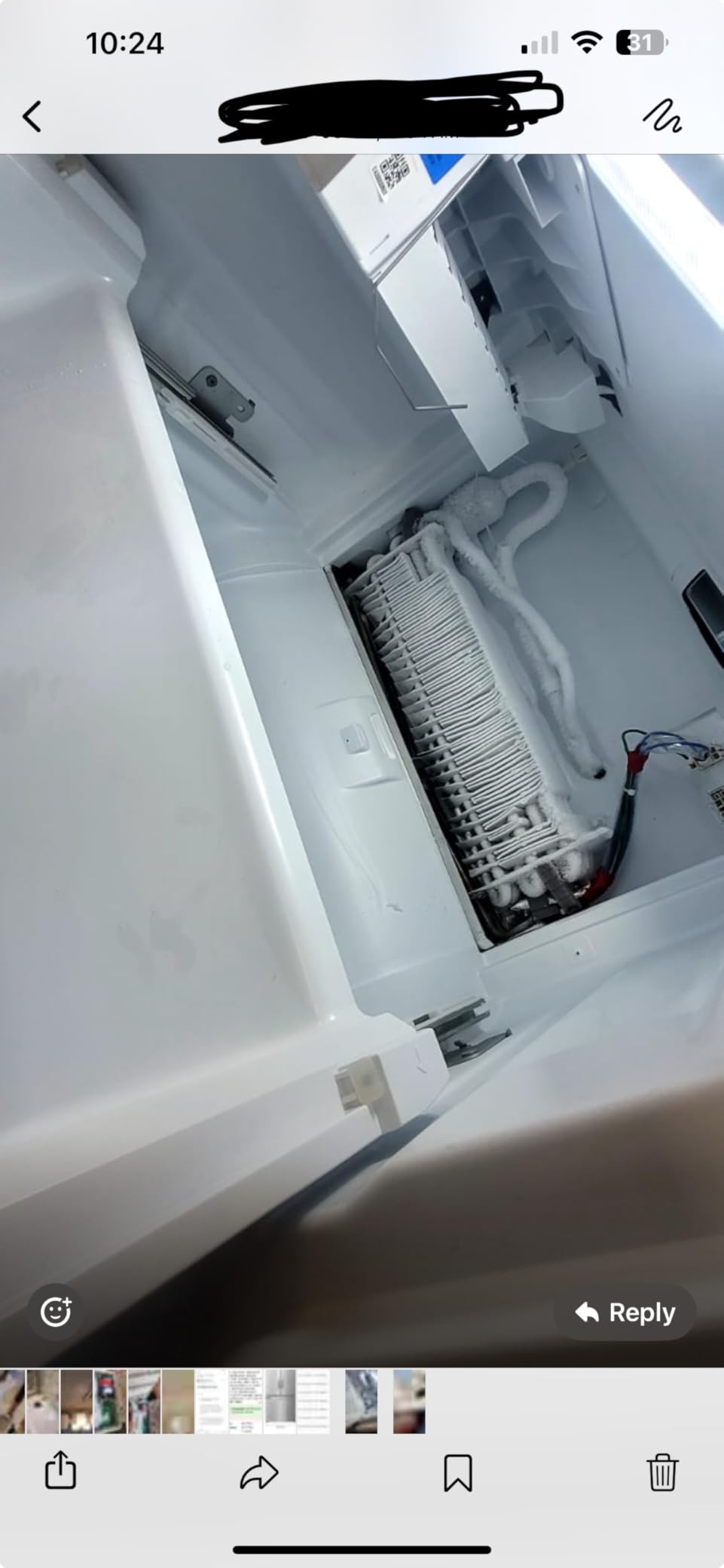
The downsides are real, though. The actual height is greater than the listed spec due to hinges and the mechanical box on top, so measure carefully. Some buyers report refrigeration failures within the first few months, and replacement parts have been backordered at times. Buy from a retailer with a strong return policy if you choose this model.
Who Should Buy This
Couples, small families, and owners of older kitchens with a 30-inch opening who want French door styling will appreciate this model. It is a smart pick for galley kitchens and condos.
Measurement Notes
Account for the hinges and top mechanical box when measuring height. Leave at least an extra inch above the unit for airflow and service access.
Common Refrigerator Buying Mistakes to Avoid
Knowing what to avoid when buying a refrigerator is just as valuable as knowing what to look for. Here are the most common mistakes I see buyers make, drawn from forum discussions and customer reviews.
First, ignoring the delivery path. People measure the cavity where the refrigerator will live but forget to check doorways, stairwells, and corners. The result is a refrigerator stuck in a hallway or, worse, a return shipping bill.
Second, overpaying for smart features you will not use. Smart refrigerators are impressive, but if you do not already use smart home technology, the connected features often go unused. A simpler model from a reliable brand typically outlasts a feature-loaded competitor.
Third, choosing the wrong configuration for the kitchen layout. A French door model in a narrow galley kitchen can block traffic every time the doors open. A side-by-side model in a wide open kitchen wastes the chance for wide, eye-level shelving.
Fourth, underestimating ice maker reliability. According to Consumer Reports survey data, around 31 percent of refrigerators with ice makers experience problems within five years. Through-the-door dispensers are even more failure-prone. If you do not truly need automatic ice, a simple ice cube tray saves money and headaches.
Finally, skipping the warranty conversation. Basic top-freezer models rarely need repairs and may not justify an extended warranty. French door models with dispensers and smart features usually do. Buy the extended warranty from the manufacturer rather than a third party for better service.
Counter-Depth vs Standard-Depth: A Closer Look
This decision comes up in almost every refrigerator purchase, and it deserves more detail than a single FAQ answer. The depth you choose affects capacity, kitchen aesthetics, traffic flow, and price.
Standard-depth refrigerators extend about 6 to 8 inches beyond standard counter edges. That extra depth translates directly into usable storage. A standard-depth French door model typically offers 25 to 28 cubic feet of capacity, while a counter-depth model of the same width might offer 18 to 22 cubic feet.
Counter-depth refrigerators sit flush with standard 24-inch counters. The aesthetic payoff is significant in open-concept kitchens, where a protruding refrigerator can interrupt sightlines. Counter-depth models also leave more floor clearance in front of the unit, which matters in narrow kitchens.
Expect to pay 10 to 20 percent more for a counter-depth model of equivalent quality. If you prioritize clean aesthetics or live in a kitchen where floor space is tight, the premium is usually worthwhile. If maximum capacity per dollar is your priority, standard-depth is the better call.
Delivery, Installation, and Haul-Away
Getting your new refrigerator home and installed is an often-overlooked cost. Different retailers offer very different levels of service.
Costco earns consistent praise on Reddit for bundling delivery, installation, and haul-away at no extra cost for members. Best Buy, Home Depot, and Lowe’s typically include basic delivery but charge extra for water line hookup, door reversal, and haul-away of your old unit. Budget $100 to $200 for full installation unless you are comfortable doing it yourself.
Independent appliance stores often provide the best service quality, even if their sticker prices are slightly higher. They typically have experienced delivery teams, better post-sale support, and relationships with local repair technicians.
Before delivery day, clear a path from the curb to the kitchen, remove any doors that might be in the way, and verify that your water line is accessible. If you are replacing a unit, drain the old refrigerator’s water reservoir and disconnect the water supply line in advance.
Smart Buying Tips and Timing
Timing your purchase can save hundreds of dollars. The best deals typically appear in May when new models arrive, between September and November during appliance sales events, and over Black Friday and Cyber Monday weekend. Avoid buying in summer when demand peaks, unless your existing refrigerator fails unexpectedly.
Check manufacturer websites for upcoming model releases before you buy. Retailers discount current models by 10 to 30 percent when new versions are announced. Open-box units from customer returns can save 20 to 40 percent if you are flexible about minor cosmetic blemishes.
Negotiate beyond the sticker price. Ask about free delivery, haul-away service, and bundle discounts when buying multiple appliances at once. Many retailers will match a competitor’s price if you show a lower advertised price for the same model.
If you are setting up a smart refrigerator, plan for a reliable home network setup so the connected features actually work as advertised.
If you are buying a used refrigerator, check the compressor warranty, look for signs of frost buildup inside the freezer, and listen for unusual noises during operation. Used top-freezer models from reliable brands can be a smart budget play if you verify condition carefully.
Frequently Asked Questions
How long do refrigerators typically last?
Modern refrigerators average 10 to 15 years of service life. Top-freezer models tend to last longest at 14 to 17 years, while refrigerators with ice makers and water dispensers typically need repairs after 8 to 10 years. Regular coil cleaning and timely filter replacements extend lifespan.
Should I repair or replace my old refrigerator?
If your refrigerator is less than 8 years old, repairs usually make sense unless the compressor failed. For units 10 to 15 years old, compare repair costs to replacement. If repairs exceed 50 percent of a new refrigerator’s price, replacement is the better call. Refrigerators over 15 years old should generally be replaced due to poor energy efficiency.
What size refrigerator fits through a 30-inch doorway?
Most refrigerators up to 33 inches wide can navigate a 30-inch doorway when tilted properly. Measure the refrigerator’s depth and height to calculate diagonal clearance. Most models also have removable doors specifically for tight delivery situations.
Do I need a water line for ice makers?
Traditional automatic ice makers require a water line connection. Some newer models include manual-fill ice makers where you pour water into a reservoir. If you want automatic ice but lack a water line, budget $150 to $300 for professional water line installation.
How much clearance do I need around my refrigerator?
Minimum clearance requirements are typically 1 inch on the sides, 2 inches at the back, and 1 inch on top. French door models need 2 to 4 inches on the hinge side for full door opening. Always check your model’s manual for specific requirements, since inadequate clearance causes overheating and premature compressor failure.
Are extended warranties worth it for refrigerators?
Extended warranties make sense for models with ice makers, water dispensers, or smart features, since these components fail most frequently. Skip the extended warranty on basic top-freezer models which rarely need repairs. If you do buy one, choose manufacturer coverage over third-party providers for better service.
What is the difference between counter-depth and standard depth?
Standard-depth refrigerators extend 6 to 8 inches beyond counter edges, offering maximum capacity. Counter-depth models align with 24-inch deep counters for a built-in appearance but sacrifice 5 to 7 cubic feet of storage. Counter-depth models cost 10 to 20 percent more despite offering less space.
What refrigerator brand should I stay away from?
Reddit users consistently warn about certain Samsung and LG models, citing compressor failures and ice maker issues. Consumer Reports survey data shows Whirlpool, GE, Maytag, and Bosch tend to be the most reliable brands. Always research the specific model, not just the brand, since reliability varies significantly by model year and configuration.
Is French door or side-by-side better?
French door refrigerators offer wider fresh food storage, easier access at eye level, and a more modern look. Side-by-side models work better in narrow kitchens, offer more freezer capacity, and usually include a through-the-door dispenser. French door models tend to cost more and use slightly more energy, while side-by-side models cannot fit wide items like pizza boxes.
What is the cheapest month to buy a refrigerator?
The best deals typically appear in May when new models arrive, September through November during appliance sales events, and over Black Friday and Cyber Monday weekend. Avoid buying during summer peak demand unless your existing refrigerator fails.
What brand of refrigerator has the least problems?
Based on Consumer Reports survey data covering more than 71,500 refrigerators, Whirlpool, GE, Maytag, and Bosch tend to have the fewest problems. Basic top-freezer models from these brands outlast feature-loaded French door units, since fewer components means fewer failure points.
Final Thoughts
Knowing how to choose the perfect refrigerator comes down to a few focused decisions. Measure carefully, match capacity to your actual eating and shopping habits, pick a configuration that fits your kitchen layout, and prioritize reliability over marketing flash. The best refrigerator guide is the one that helps you make those calls confidently.
The refrigerators I have recommended in this guide cover the most common use cases, from compact apartment living to full French door family kitchens. Two products were updated for 2026 to reflect current availability: the Hamilton Beach HBF1558 replaces the discontinued Kenmore 46-51805 side-by-side, and the white Kenmore 18.1 cubic foot top mount replaces the unavailable stainless steel variant. Both replacements preserve the same strengths at similar price points.
Take the time to compare models using the criteria outlined here, and your next refrigerator will serve your household well for the next decade. The extra research effort now prevents years of frustration with an appliance that does not fit your space, your cooking habits, or your budget. For more appliance guidance, explore our LG appliance reviews and our guide to a solid home network setup for smart refrigerators.


![Best Electric Skateboard [cy]: 12 Top-Rated Boards Tested](https://www.guidespot.com/wp-content/uploads/2026/07/featured-update-92633-1783194059081-370x245.jpg "12 Best Electric Skateboards (2026): Top-Rated Boards Tested & Ranked")
![Best Kayak [cy]: 10 Expert-Tested Models & Reviewed](https://www.guidespot.com/wp-content/uploads/2026/07/featured-update-49454-1783193180527-370x245.webp "10 Best Kayaks (2026): Expert-Tested & Compared for Every Water Type")
