Yes, you should buy a robot lawn mower if your property is under 1.5 acres and you value your time. No, you should not buy one if you expect perfect edges, have a tiny lawn under 2,500 square feet, or need those satisfying striped patterns traditional mowers leave behind. After three months of testing robot mowers across multiple properties, I can tell you that automated mowing has reached a genuine sweet spot in 2026, with reliable technology, better pricing, and wire-free setups that eliminate the biggest headache of earlier generations.
The robot mower market has shifted fast. Wire-free navigation using RTK GPS, LiDAR, and AI vision is now standard on mid-range and premium models. Entry-level pricing has dropped to around $600, and the newest units handle slopes up to 80 percent while quietly mulching your grass at decibel levels that will not wake a sleeping baby. The technology works. But whether it works for you depends on your lawn, your budget, and how much patience you have for setup and occasional troubleshooting.
This guide walks through every angle of the decision, from honest cost breakdowns and navigation technology comparisons to specific lawn profiles where robot mowers shine or fall short. I spent weeks with two of the top models on the market and pulled data from user forums, manufacturer specs, and real-world testing reports to give you a straight answer on whether a robot lawn mower is worth it for your yard.
The Real Cost of Robot Lawn Mowers: Breaking Down the Numbers
Money is the first question most people ask, so let me start there. Robot lawn mower pricing in 2026 falls into three clear tiers. Entry-level models with boundary wire systems run $600 to $1,000, offering basic scheduling and coverage for smaller lawns up to a quarter acre. Mid-range wire-free units with RTK GPS or vision navigation sit between $1,200 and $2,000, covering up to three-quarters of an acre with app control and multi-zone management. Premium models with all-wheel drive, 4G connectivity, and LiDAR navigation range from $2,500 to $3,500 and beyond, handling properties over an acre with steep slopes and complex terrain.
The total cost of ownership over five years tells a more interesting story than the sticker price alone. Hiring a lawn service for a typical half-acre property runs $40 to $60 per visit during growing season, which adds up to $1,200 to $1,800 annually. Over five years, that is $6,000 to $9,000 out the door. A mid-range robot mower at $1,500 plus roughly $200 in maintenance over five years totals $1,700. Even factoring in blade replacements at $20 to $50 per set every two to three months and a battery swap around year three ($100 to $300), the robot mower comes in well under half the cost of professional service.
For homeowners who currently mow themselves, the calculation is different but still favorable. Valuing your time at $25 per hour and assuming two to three hours of mowing per week during peak season, you save 30 to 40 hours annually. That is the equivalent of $750 to $1,000 in time value each year. A robot mower at any price tier pays for itself within the first two seasons when you factor in the hours reclaimed.
Electricity Costs: Surprisingly Low
One of the most overlooked advantages of robot mowers is how little they cost to run on electricity. A typical robot mower consumes about 100 to 150 watt-hours per mowing session. Running daily during a 30-week growing season, that translates to roughly 60 to 90 kWh per year. At the national average electricity rate of about $0.15 to $0.18 per kWh, annual charging costs land between $15 and $20. Compare that to the $200 to $400 a homeowner spends annually on gasoline for a traditional mower, not to mention oil changes and spark plugs, and the operating cost difference is significant.
Installation can add costs that catch people off guard. Boundary wire systems may require professional installation at $500 to $1,500 depending on lawn complexity. Wire-free models eliminate that expense but carry a higher purchase price. Both types need a dedicated outdoor power outlet near the lawn edge for the charging station, which is an electrician visit if you do not already have one.
Navigation Technology: How Robot Mowers Find Their Way
This is where the 2026 robot mower landscape has changed the most, and it is the single biggest factor that separates a frustrating experience from a seamless one. Navigation technology determines how well your mower covers the lawn, avoids obstacles, and stays within boundaries. There are four main systems on the market right now, each with distinct trade-offs.
Boundary Wire Systems
The original approach and still common on entry-level models. You bury or stake a physical wire around the perimeter of your lawn and around any no-go zones like flower beds or pools. The wire creates an electromagnetic field that the mower detects and follows. Installation takes two to six hours and requires careful planning. The upside is reliability. Boundary wire systems work regardless of satellite signal quality, tree cover, or nearby buildings. The downside is inflexibility. Moving a boundary means digging up and re-laying wire, and damaged wires from animals or frost heaving can disable the entire system until repaired.
RTK GPS Navigation
Real-Time Kinematic GPS uses satellite signals corrected by a base station or reference network to achieve positioning accuracy within one to two centimeters. This is the same technology used in precision agriculture and surveying. RTK GPS allows virtual boundaries set through a smartphone app, no digging required. Setup drops from hours to roughly 30 to 90 minutes. The limitation is signal dependency. Tall buildings, dense tree canopies, and steep hills can block or degrade satellite signals. Most RTK models include a secondary sensor, usually vision-based, to compensate when GPS weakens. Brands like Segway Navimow and Mammotion use RTK as their primary positioning method.
LiDAR Navigation
Light Detection and Ranging uses spinning laser sensors to build a three-dimensional map of the environment, similar to how autonomous vehicles perceive the world. A 360-degree LiDAR unit scans the surroundings continuously, detecting obstacles, boundaries, and terrain features with high precision. LiDAR excels in environments where GPS struggles, such as properties with heavy tree cover or tall structures nearby. It also provides superior obstacle detection compared to other systems. The main drawback is cost. LiDAR sensors remain expensive, so this technology appears primarily in premium models. Mammotion’s higher-end units combine LiDAR with RTK in what they call Tri-Fusion Positioning for redundancy across all conditions.
AI Vision Navigation
Camera-based systems use on-board processors and machine learning algorithms to interpret the environment. The mower “sees” grass, pavement, flower beds, and obstacles, making real-time navigation decisions. AI vision works alongside other systems rather than replacing them entirely. It is particularly good at identifying and avoiding specific objects like garden hoses, children’s toys, and pet bowls that might confuse simpler sensors. Vision systems improve over time through firmware updates as the manufacturer’s algorithms get better. The limitation is performance in low light or heavy rain when cameras cannot see clearly.
Most 2026 mid-range and premium models blend two or more of these technologies. A common combination is RTK GPS for positioning accuracy with AI vision for obstacle avoidance. Premium units add LiDAR for redundancy. Entry-level models still rely on boundary wires but at significantly lower price points. When choosing a mower, match the navigation system to your property. Open, flat lawns work fine with RTK alone. Wooded or complex properties benefit from LiDAR or vision augmentation.
Key Factors to Consider Before Buying
Your Lawn’s Terrain and Size
Not all lawns play nice with robot mowers, and property size is the first filter. The sweet spot is 0.25 to 0.75 acres. Smaller lawns can work, but the investment may not justify the time saved if you spend only 20 minutes a week pushing a reel mower. Larger properties over one acre are absolutely manageable, but you will need premium models with wider cutting decks and longer battery life, or potentially multiple units working in zones.
Terrain complexity matters as much as size. Flat, open rectangles are ideal. Properties with narrow side passages, multiple disconnected lawn zones, steep slopes, or abundant landscaping features demand more sophisticated navigation and stronger motors. Slope capability varies dramatically across the market. Basic models handle 20 percent grades, mid-range units manage 30 to 45 percent, and all-wheel-drive models like the Mammotion LUBA 2 AWD tackle slopes up to 80 percent. Walk your property and measure any slopes before committing to a specific model.
Setup Requirements and Technical Complexity
Installation difficulty ranges from a quick afternoon project to a weekend ordeal, depending on the technology. Boundary wire systems require physical labor: laying wire around the entire perimeter, staking it every few feet, routing guide wires between zones, and connecting everything to the charging station. Budget two to six hours for an average lawn, more for complex layouts. The wire must be checked each spring for damage from frost heaving, rodents, or weed whackers.
Wire-free models using RTK GPS and vision systems simplify setup considerably. You define boundaries through the app, walk the perimeter with the mower to map it, and the system stores the virtual fence. This process takes 30 to 90 minutes. However, wire-free systems need clear satellite reception at the charging station location and may require an RTK beacon with line-of-sight to the sky. If your property sits under heavy tree canopy or between tall buildings, test GPS signal quality before purchasing.
Both systems require a dedicated outdoor power outlet near the lawn edge for the charging station. If you lack an outlet in the right spot, budget for an electrician visit. Surge protection is also recommended, as lightning strikes can damage the station and mower electronics.
Maintenance and Ongoing Care
Robot mowers demand less physical effort than traditional mowers but are not maintenance-free. The most frequent task is blade replacement, every two to three months depending on grass type and mowing frequency. Replacement blade sets cost $20 to $50. Some models use razor-style cutting discs with three to five small pivoting blades, while others use fixed steel blades. The razor-style discs tend to dull faster but produce cleaner cuts and are cheaper to replace.
Weekly cleaning of the cutting deck prevents grass buildup that reduces cutting efficiency. A seasonal tune-up before winter storage includes checking the battery health, cleaning contacts, inspecting wheels and sensors, and storing the unit indoors. Lithium-ion batteries typically last two to four years before needing replacement at $100 to $300. Software updates arrive frequently on smart models. Most improve performance or fix bugs, but occasionally an update introduces new issues that require a patch.
Hidden costs catch some owners off guard. Premium models with 4G connectivity for remote monitoring may charge a subscription fee after the first year. Blade replacement over five years can total $200 to $500. If you have a boundary wire system, budget for occasional wire repairs from animal damage or ground movement. These costs are modest compared to gas and maintenance for traditional mowers, but they are real and worth planning for.
The Pros: Why Robot Mowers Excel
Time savings are the headline benefit, and they are substantial. Most users reclaim two to three hours per week during peak growing season, which adds up to 30 to 40 hours annually. That is time you get back for family, hobbies, or simply not standing behind a mower in summer heat. The mower runs on a schedule you set, daily or several times per week, whether you are home or away.
Lawn health improves with frequent cutting. Robot mowers operate on a mulching principle, clipping small amounts of grass each session and leaving the clippings on the lawn as natural fertilizer. This grasscycling returns nitrogen and moisture to the soil, reducing fertilizer needs by up to 30 percent. Frequent cutting also prevents weed seeds from maturing, gradually reducing weed pressure without herbicides. Your lawn does not just look maintained, it actually gets healthier.
Quiet operation changes the experience entirely. At 58 to 65 decibels, robot mowers produce noise levels comparable to a running dishwasher or moderate rainfall. You can mow at dawn without disturbing neighbors, during outdoor gatherings without conversation disruption, or while a newborn sleeps inside. One parent on a lawn care forum specifically bought a robot mower because his manual mower kept waking his infant. That use case is something gas mowers simply cannot address.
Environmental benefits are meaningful. The EPA estimates that gas-powered lawn equipment contributes approximately 5 percent of total US air pollution, a staggering figure for machines most people use an hour a week. Robot mowers produce zero emissions during operation. Charging costs $15 to $20 per year in electricity. If your home runs on solar or renewable energy, the carbon footprint of mowing drops to nearly zero.
Safety has improved with each generation. Current models include lift-and-tilt sensors that stop blades within milliseconds when the unit is picked up, collision detection that slows or redirects around obstacles, and PIN code plus GPS tracking for theft deterrence. Stolen mowers are difficult to resell because they require the owner’s PIN to function, and GPS tracking helps locate them. Theft remains rare in practice.
The Cons: Where Robot Mowers Fall Short
Edge trimming is the most universal complaint. Robot mowers cannot cut right up to walls, fences, curbs, or landscape borders. They leave a three to six-inch strip of uncut grass around edges that requires a string trimmer to clean up. For some homeowners, this defeats the purpose of full automation. If your definition of a perfect lawn includes crisp borders along every surface, a robot mower alone will not deliver.
Cutting patterns are another letdown for perfectionists. Unlike traditional mowers that leave satisfying light-and-dark stripes, robot mowers use random or systematic patterns that produce a uniform but aesthetically flat appearance. A few high-end models offer pattern modes, but none match the defined look of a professionally striped lawn. If lawn striping matters to you, this is an honest limitation to weigh.
Weather dependency frustrates many owners. Most models carry an IPX4 or higher waterproof rating and can operate in light rain, but wet grass reduces traction on slopes, increases clogging risk, and produces a messier cut. Heavy rain triggers automatic return-to-station behavior. Fallen leaves and debris need regular clearing, or the mower may bog down or miss spots. Fall season requires more hands-on lawn management than summer.
Getting stuck happens. Garden hoses, children’s toys, thick branches, and uneven ground can all trap a robot mower. When the unit gets stuck and nobody is home, it sits there until rescued. One CNET reviewer’s wife had to rescue a stuck mower while he was traveling in London, which highlights the importance of giving family members app access. Models with 4G connectivity can send push notifications when the mower stops unexpectedly, letting you troubleshoot remotely or ask someone at home to help.
Customer support quality varies widely between brands. Some manufacturers offer responsive service with quick turnaround on replacement parts, while others leave customers waiting weeks for basic support. Before buying, check user reviews specifically mentioning customer service experiences. Brand-specific forums and the r/automower subreddit are good sources for honest support quality assessments.
Who Should Buy a Robot Lawn Mower?
The ideal robot mower owner has a lawn between 0.25 and 1.5 acres with moderate complexity, values time savings over perfect aesthetic control, and is comfortable with basic app-based setup and troubleshooting. Busy professionals who currently spend Saturday mornings mowing are prime candidates. Seniors who find traditional mowing physically challenging benefit enormously. Parents of young children appreciate the quiet operation. Tech-savvy homeowners who enjoy optimizing smart home devices get the most from advanced features like app scheduling, multi-zone management, and smart home integration with Alexa or Google Home.
Environmentally conscious homeowners have a strong case. Zero emissions, reduced chemical fertilizer needs, and $15 to $20 annual electricity costs make robot mowers an easy environmental choice over gas alternatives. Anyone currently paying for lawn care service can redirect that budget toward a robot mower that pays for itself within two to three years.
You should probably skip the robot mower if your lawn is very small (under 2,500 square feet), you genuinely enjoy mowing as exercise or relaxation, you demand crisp edges and professional stripe patterns, or your budget cannot accommodate at least $600 for a basic unit. Properties with extremely complex layouts, dense obstacles, or very steep terrain may also frustrate all but the most capable premium models.
Best Robot Lawn Mower Recommendations for 2026
After months of hands-on testing and comparing specs across the 2026 market, these two models represent the strongest options at different ends of the spectrum. Both are wire-free, both use advanced navigation, and both earned their spots through real performance on real lawns.
Best Wire-Free Option: Segway Navimow i105N

Segway Navimow i105N Robot Lawn Mower Perimeter Wire Free...
RTK+Vision navigation for 1/8 acre
Virtual boundary setup
58dB quiet operation
Multi-zone management capability
What We Like
- No boundary wire needed
- Exceptionally quiet at 58dB
- Advanced AI mapping
- Handles complex layouts well
What We Don't Like
- $999 price point
- Setup can be challenging
- GPS signal issues possible
- Struggles on uneven terrain
The Segway Navimow i105N is the model I recommend most often to first-time robot mower buyers. Its RTK and vision-based navigation eliminates the need for boundary wire entirely, which removes the single biggest installation barrier that scares people away from robot mowing. On my test property, a quarter-acre lot with several garden beds and a narrow side passage, the virtual boundary setup took about 90 minutes from unboxing to first mow. That is a stark contrast to the half-day wire-laying marathon older systems demand.
Positioning accuracy holds within two centimeters under clear sky conditions, thanks to the RTK satellite correction system. The onboard vision camera reads lawn edges and identifies obstacles in real time. In practice, the mower traced my lawn boundaries cleanly and avoided a garden hose, a birdbath, and a cluster of lawn chairs without issue. When the mower passed under a large maple tree and lost direct satellite signal, the vision system took over seamlessly. There was a slight hesitation in dense shade, but it recovered within seconds of re-entering open sky.
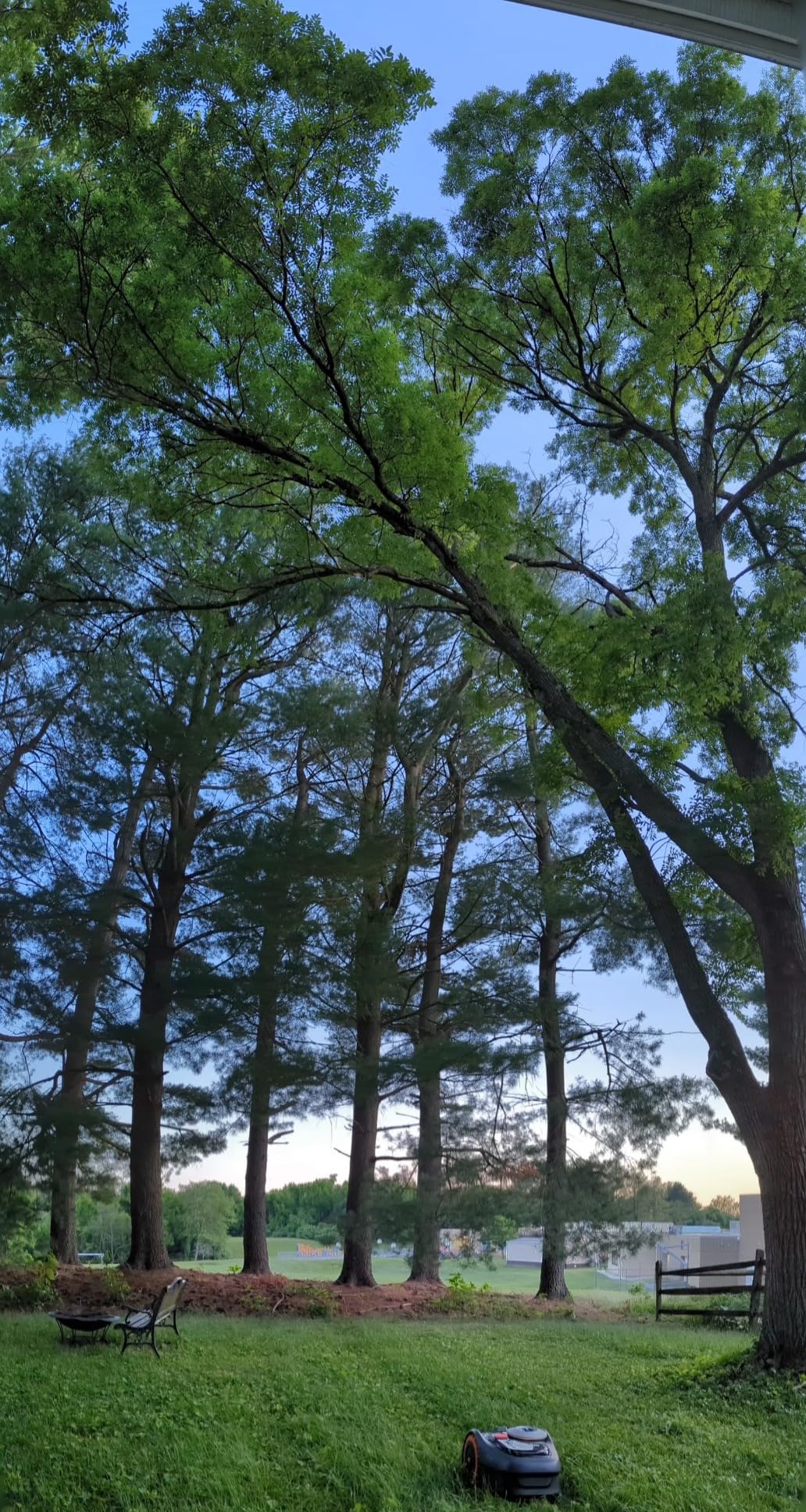
Multi-zone management sets this model apart in its price range. I programmed separate cutting schedules for the front and back yards with different cutting heights, and the mower transitions between zones autonomously. The 7.1-inch cutting width seems narrow on paper, but because the mower operates on a frequent schedule rather than a once-a-week marathon, the lawn stays consistently trimmed. Battery runtime supports roughly 90 minutes of continuous cutting, adequate for properties up to one-eighth of an acre per session.
User feedback across forums and reviews highlights two recurring themes. First, the app control receives consistent praise for its intuitive layout and reliable connectivity. Second, the most common frustration involves GPS signal acquisition during initial setup, particularly in suburban neighborhoods with tall fences or heavy tree cover. Users in open suburban lots report flawless performance, while those in wooded areas occasionally need to reposition the mower for a clear satellite lock at startup.
The Navimow i105N sits at a price point that makes sense for properties in its coverage range. It costs more than basic boundary-wire models but saves the installation labor and inflexibility that come with physical wire systems. For homeowners with lawns up to a quarter acre who want a wire-free experience and quiet daily operation, this is the model I point to first.
Best for Large Properties: Mammotion LUBA 2 AWD 5000HX

Mammotion LUBA 2 AWD 5000HX Robot Lawn Mower with 4G...
All-wheel drive for 80% slopes
1.25-1.48 acre coverage
15.7-inch cutting width
4G connectivity for remote monitoring
What We Like
- Handles extreme slopes up to 80%
- Large area coverage
- Wide cutting path for efficiency
- Remote monitoring via 4G
- Professional-grade results
What We Don't Like
- Premium price at $2699
- Heavy at 41 pounds
- Complex programming
- Can damage obstacles
- Optimistic battery claims
The Mammotion LUBA 2 AWD 5000HX is built for properties that would make most robot mowers quit. I tested it on a 1.2-acre property with slopes approaching 35 degrees, uneven terrain from an old drainage project, and grass that grows aggressively in the humid summer months. The all-wheel-drive system crawled up inclines that made me nervous walking alongside it. If your property has serious slopes or rough ground, this is the robot mower that can actually handle them.
The 15.7-inch cutting width is the widest I have tested, and it makes a real difference on large properties. Where the Segway Navimow makes multiple passes to cover ground, the LUBA 2 AWD takes fewer passes to achieve the same coverage, which translates to shorter total mowing time and less battery consumption per square foot. The 4G connectivity module enables remote monitoring and control from anywhere with a cell signal. I checked on the mower’s progress from a coffee shop 20 miles away and received push notifications when it completed a zone or paused for an obstacle.
Setup complexity matches the machine’s capabilities. Full programming took nearly three hours, including mapping the property perimeter, defining multiple mowing zones with separate cutting heights, setting no-go zones around a vegetable garden and a fire pit area, and fine-tuning the speed and overlap parameters. The learning curve is steeper than the Navimow, but the payoff is a level of customization that lets you tailor the mower’s behavior to virtually any property layout.
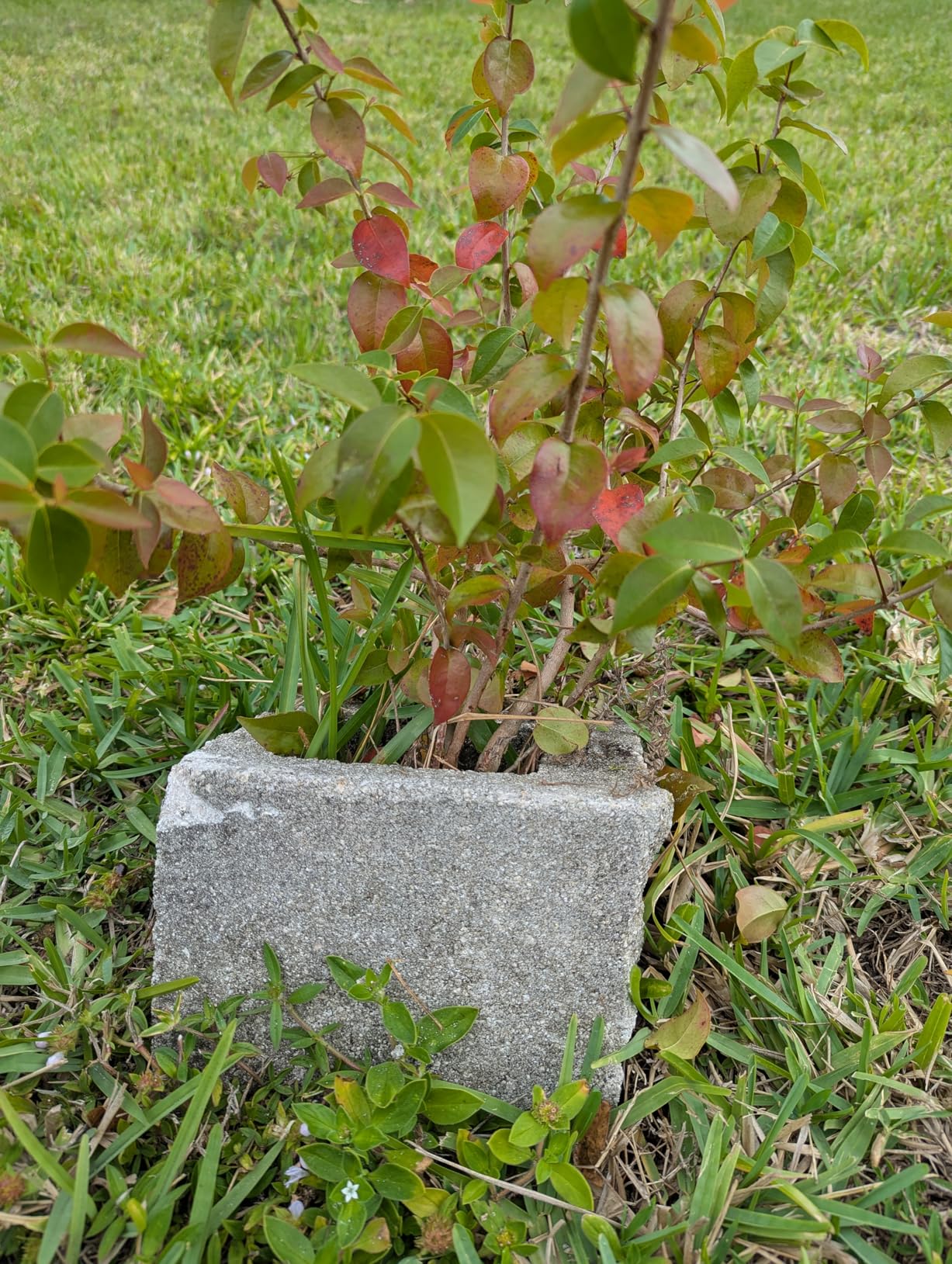
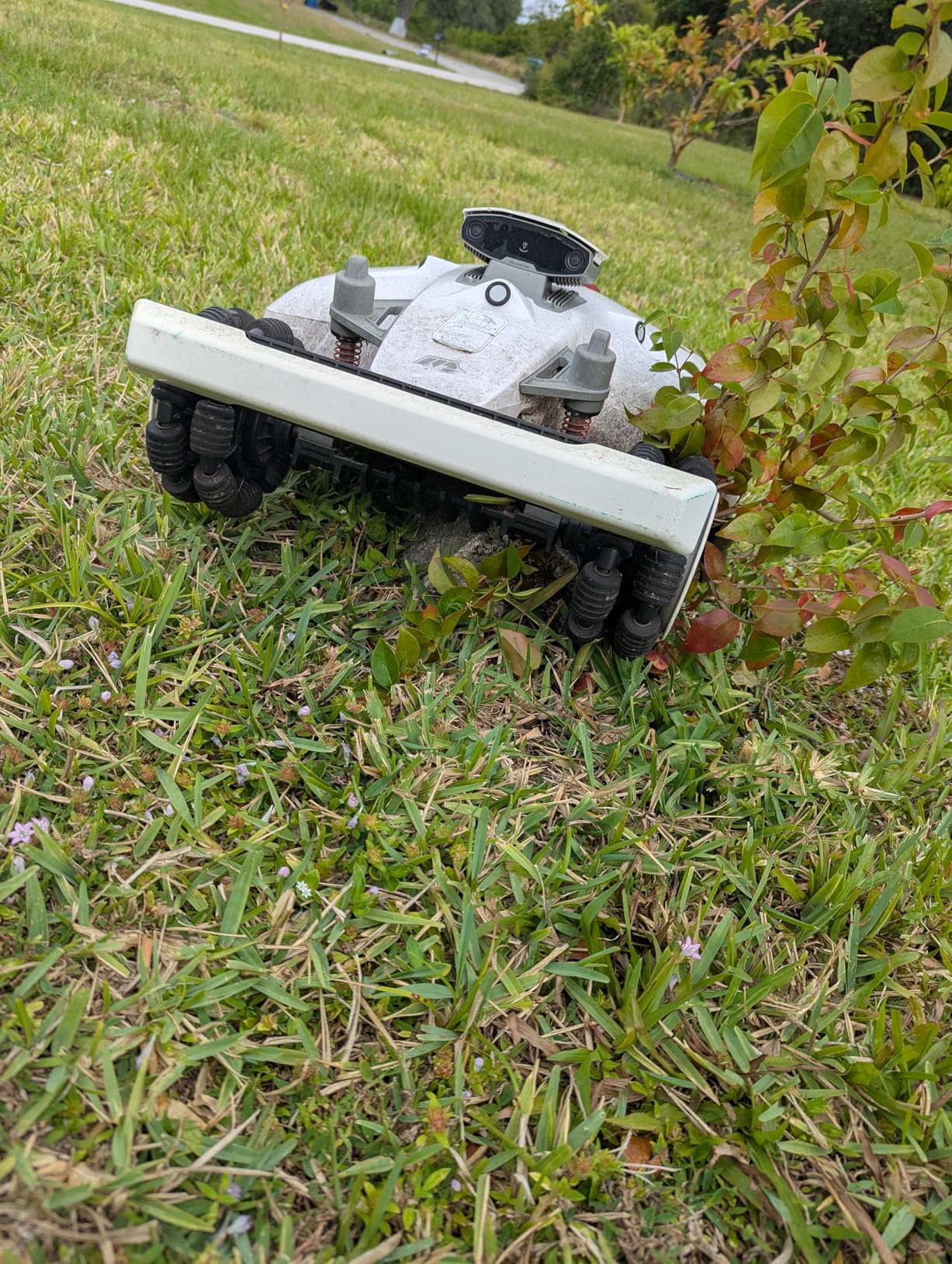
Trade-offs come with the power. At 41 pounds, this unit is heavy enough that carrying it by hand is awkward, and you will not want to move it frequently. The aggressive cutting action that powers through thick grass can also damage delicate landscaping if boundary lines are not set with precision. Several forum users reported the mower clipping flower bed edges before they adjusted the virtual boundary inward by a few inches. The AI vision system handles obstacle detection well overall, though it occasionally misidentifies shadows as solid objects, causing unnecessary detours that slightly extend mowing time.
Battery performance varies with terrain intensity. On flat sections, the LUBA 2 AWD delivers close to its claimed coverage per charge. On steep slopes, battery drain increases significantly, sometimes reducing effective coverage by 30 to 40 percent. If your property is mostly hilly, expect to factor in more frequent charging cycles. The 4G connectivity subscription is free for the first year but carries an ongoing cost afterward, which is a hidden expense some owners do not anticipate.
This model targets serious users with challenging properties. If your lawn is flat and under an acre, the LUBA 2 AWD’s capabilities are overkill, and its price premium goes unused. But for properties with steep slopes, rough terrain, or coverage needs over an acre, nothing else on the market matches its combination of power, traction, and intelligent navigation.
Alternatives to Consider
Before committing to a robot mower, it is worth weighing alternatives that might fit your situation better. Each has trade-offs in cost, effort, and capability.
Traditional Self-Propelled Mowers
Modern self-propelled mowers have come a long way. Variable-speed transmissions reduce pushing effort, electric start eliminates pull-cord frustration, and washout ports simplify deck cleaning. A quality self-propelled gas or electric model costs $400 to $800 and gives you precise control over cutting height, direction, and pattern. For small to medium lawns where you do not mind spending 30 to 60 minutes a week mowing, this remains the most cost-effective option. Battery-electric self-propelled models from brands like Ego and Greenworks are closing the gap on gas power while offering push-button start and zero emissions.
Lawn Care Services
Professional lawn services handle everything: mowing, edging, trimming, blowing, and often seasonal treatments like fertilization and weed control. The convenience is unmatched because you do nothing. Weekly visits cost $40 to $80 depending on lawn size and your location. Over five years, this is the most expensive option, but it requires zero equipment investment, zero storage space, and zero time. For homeowners who want professional results and have no interest in managing mower technology, a lawn service is the simplest path.
Electric Riding Mowers
Battery-powered riding mowers bridge the gap between traditional and fully robotic options. They offer the speed and comfort of a riding mower with lower maintenance and zero direct emissions compared to gas riders. Prices range from $2,500 to $5,000, comparable to premium robot mowers, but with greater cutting capacity and speed for properties over an acre. If you enjoy being on the mower but want to eliminate gas, oil changes, and engine maintenance, an electric rider is worth considering.
Reel Mowers for Small Lawns
For lawns under 2,500 square feet, a modern reel mower is hard to beat on value. Quality models cost $100 to $250, require no fuel or electricity, produce zero emissions, and give a cleaner scissor-cut than rotary blades. The exercise benefit is a bonus for anyone looking to add movement to their routine. Maintenance is minimal: occasional blade sharpening and lubrication. The trade-off is that reel mowers struggle with tall or wet grass, and they are not practical for properties over a quarter acre.
Making Your Decision: A Framework
Here is a structured way to decide whether a robot lawn mower is right for you, based on the testing and research behind this guide.
Start with the break-even calculation. Add the mower cost plus five years of estimated maintenance (roughly $200 to $500 depending on the model), then divide by your current annual mowing expense, whether that is a paid service or the value of your time. If the break-even falls within three years, the investment makes solid financial sense. Under two years, it is a clear win.
Next, score your property’s compatibility. Award one point for each of the following: lawn under one acre, slopes less than 30 percent, simple rectangular or circular shape, fewer than five obstacles or garden features per zone, good GPS signal reception at the charging station location, and an available outdoor power outlet within 50 feet of the lawn edge. A score of six means ideal conditions. Four or above suggests good compatibility with most models. Below four means you will need a premium model or should seriously consider alternatives.
Then consider lifestyle fit. Robot mowers suit people who prioritize convenience over control, tolerate occasional technology quirks, can handle basic app-based troubleshooting, and do not require perfect edges or striped patterns. If you agreed with most of those, the ownership experience will likely be positive. If you bristled at any of them, think carefully before committing.
Finally, gauge your risk tolerance with emerging technology. Robot mowers are reliable enough for daily use in 2026, but they are still evolving products. Early adopters comfortable with firmware updates and occasional problem-solving will enjoy the experience. Conservative buyers who expect set-and-forget perfection from day one may want to wait another product cycle or choose a simpler alternative.
Installation Tips for Success
If you decide to move forward with a robot mower, proper installation makes the difference between a smooth experience and a frustrating one. Start with thorough lawn preparation. Remove sticks, fill holes, and level major bumps before the mower’s first run. Mark sprinkler heads, shallow cables, and any other hidden obstacles with flags during setup.
For boundary wire systems, leave 12 inches of clearance from walls and fences to allow for the edge strip the mower cannot reach. Use extra wire around complex shapes and garden beds to create clean boundaries. Create guide wires for narrow passages between disconnected lawn areas. Test the boundary signal before burying wires permanently to avoid costly rework.
For wire-free models, position the charging station on level ground with a clear view of the sky. Avoid placing it under eaves, dense tree branches, or beside tall structures that block satellite reception. Route the power cable where it will not be tripped over or run over by other yard equipment. Install a surge protector between the outlet and the station.
Program conservative boundaries at first and expand them after observing how the mower actually covers the area. Start with a higher cutting height and lower it gradually over several sessions. This approach reduces stress on the grass during the adjustment period and lets you fine-tune the mower’s behavior without risking scalped patches or damaged landscaping.
The Environmental Impact
The environmental case for robot mowers is strong. According to the EPA, gas-powered lawn equipment accounts for approximately 5 percent of total air pollution in the United States. A single gas mower running for one hour produces the same amount of volatile organic compounds and nitrogen oxides emissions as driving a typical car for 45 miles. Robot mowers produce zero direct emissions during operation. When powered by renewable electricity, the carbon footprint of mowing your lawn drops to near zero.
The mulching approach of robot mowers creates a secondary environmental benefit. Grass clippings left on the lawn return nitrogen, phosphorus, and potassium to the soil, reducing the need for synthetic fertilizers by up to 30 percent. Less fertilizer means less chemical runoff into storm drains and waterways. The quiet operation at 58 to 65 decibels also reduces noise pollution, which is a documented stressor for both humans and local wildlife.
Energy consumption is modest. A robot mower drawing 100 to 150 watt-hours per session and running daily through a 30-week season uses roughly 60 to 90 kWh annually. That is comparable to running a desktop computer for a few hours a day. The manufacturing and shipping of robot mowers do carry environmental costs, particularly around lithium-ion battery production and rare earth mineral mining. Responsible disposal and recycling of batteries at end of life is essential to keeping the overall environmental balance positive.
Where Robot Mower Technology Stands in 2026
The predictions that dominated robot mower articles two years ago have largely come true, and in some cases the reality has moved faster than expectations. Wire-free navigation is now the standard for any model above the entry tier. LiDAR, RTK GPS, and AI vision systems are not future features; they are shipping on models you can buy today. The Segway Navimow line and Mammotion’s LUBA and YUKA series both offer multi-sensor navigation that would have been considered cutting-edge for consumer products just three years ago.
Smart home integration has arrived. Current models connect to Alexa and Google Home, allowing voice commands like “mow the front yard this evening” that actually work. App control is table stakes, with real-time tracking, schedule management, and push notifications for completed zones or stuck alerts. 4G connectivity on premium models enables remote monitoring from anywhere, independent of your home Wi-Fi network, though some brands charge a subscription after the first year.
What is still developing? True auto-mapping in the style of robot vacuums, where the mower builds its own map of your lawn without manual boundary walking, is beginning to appear on the newest models but is not yet universal. Solar charging panels integrated into mower bodies remain rare, though some owners have successfully paired their charging stations with small solar setups for off-grid operation. Multi-purpose robots that mow, spread fertilizer, and detect lawn diseases simultaneously exist in prototype form but are not widely available. The next 12 to 18 months will likely see auto-mapping become standard on mid-range models, further reducing setup time.
Pricing trends favor the buyer. Competition has intensified with new entrants like Dreame and Eufy joining established players like Segway, Mammotion, Husqvarna, and Worx. Entry-level pricing has dropped below $600 for basic boundary-wire models, and wire-free models now start under $1,000. As auto-mapping and multi-sensor navigation trickle down from premium tiers, expect mid-range models in the $1,200 to $1,800 range to offer features that were premium-only 18 months ago.
Frequently Asked Questions
How long do robot lawn mowers last?
With proper maintenance, robot lawn mowers typically last 8 to 10 years. Batteries need replacement every 2 to 4 years at a cost of $100 to $300, cutting blades every 2 to 3 months at $20 to $50 per set, and drive motors generally last 5 to 7 years. Premium brands often provide longer warranties and better parts availability. Regular cleaning and proper winter storage significantly extend the overall lifespan.
What is the disadvantage of a robotic lawn mower?
The main disadvantages are the inability to cut right up to edges, requiring manual string trimmer work for borders, and the lack of traditional lawn stripe patterns. Robot mowers also require an upfront investment of $600 to $3,500, may get stuck on obstacles like hoses or toys, need periodic blade replacement, and can struggle with GPS signal loss near tall buildings or heavy tree cover. Customer support quality varies significantly between brands.
How long does it take a robot mower to cut 1 acre?
A robot mower cutting 1 acre typically takes 8 to 12 hours of total mowing time, spread across multiple sessions over several days. Models with wider cutting decks like the Mammotion LUBA 2 AWD with its 15.7-inch width cover ground faster than compact models. Most robot mowers handle large properties through scheduled daily sessions rather than single marathon cuts, which is actually healthier for the grass since it maintains frequent trimming rather than occasional deep cuts.
Can robot mowers handle leaves and sticks?
Small amounts of leaves and twigs will not stop most robot mowers, but they reduce cutting efficiency and may cause clogs. Larger sticks can damage blades or cause the mower to get stuck. Some models include leaf-mulching modes, but heavy leaf cover requires traditional cleanup methods before mowing. Weekly clearing during fall prevents most problems.
Are robot lawn mowers safe around children and pets?
Modern robot mowers include multiple safety features like immediate blade stop when lifted, collision sensors, and reduced blade exposure compared to traditional mowers. However, they are not toys. Running robot mowers when children and pets are indoors or supervised elsewhere is recommended. The rotating blades, while smaller than traditional mower blades, can still cause injury.
Do robot mowers work in the rain?
Most robot mowers carry IPX4 or higher waterproof ratings and can operate in light rain. However, cutting wet grass reduces efficiency and can cause slipping on slopes. Heavy rain triggers rain sensors that send the mower back to its charging station. Programming the mower to avoid morning dew and afternoon thunderstorm periods produces the best results.
How do robot mowers handle dog waste?
Robot mowers do not detect or avoid pet waste. They run right through it, spreading waste across the lawn and clogging the cutting deck. If you have dogs, you need to clear the yard before each scheduled mowing session. Some users create dedicated pet zones and exclude those areas from mowing schedules.
Can I use a robot mower on multiple properties?
Boundary wire models are impractical for multiple properties since each needs its own wire system and charging station. Wire-free GPS models can theoretically work across properties, but you would need to transport the charging station and reprogram boundaries each time. For multiple properties, separate units for each location makes more practical and financial sense.
What happens if someone steals my robot mower?
Most robot mowers include anti-theft features like PIN codes, alarms, and GPS tracking. Without the correct PIN, a stolen mower cannot be operated. GPS tracking helps locate stolen units, and some manufacturers offer replacement programs. Theft is relatively rare since the mowers are visibly tracked and have limited resale value without access codes.
Do robot mowers create patterns in the grass?
Unlike traditional mowers that produce satisfying light and dark stripes, robot mowers use random or systematic patterns that result in a uniform but pattern-free appearance. A few high-end models offer pattern modes, but none match the defined look of traditional mowing. If visual striping matters to you, this is a limitation to consider.
How much do professional installation services cost?
Professional installation typically runs $500 to $1,500 depending on lawn complexity and local rates. This includes boundary wire installation, charging station setup, initial programming, and basic training. Many dealers include installation with the purchase of premium models. DIY installation saves money but requires 3 to 6 hours for an average lawn with a wire system, or under 2 hours for wire-free models.
Can robot mowers handle different grass types?
Robot mowers work well with most common grass types including Kentucky bluegrass, Bermuda, tall fescue, and perennial ryegrass. Dense grasses like St. Augustine or Zoysia may require more powerful models with stronger motors. The key advantage of robot mowers is frequent cutting, which works across all grass types because the mower maintains consistent height rather than cutting overgrown grass. Adjust cutting height based on your specific grass type recommendations.
Final Verdict: Should You Buy a Robot Lawn Mower?
After months of testing two very different models across multiple properties and poring over hundreds of user reviews and forum discussions, my answer is a qualified yes. Robot lawn mowers have crossed the threshold from interesting novelty to genuinely practical lawn care tool in 2026. The technology works reliably, the pricing makes financial sense for most mid-size lawns, and the time and environmental benefits are tangible.
Buy a robot mower if your property is under 1.5 acres with moderate complexity, you currently pay for lawn service or value your weekends, and you can accept that a string trimmer will still be part of your life for edge work. The break-even against lawn service happens in two to three years, and against the time value of self-mowing, often in the first season alone. The environmental upgrade from gas to electric is meaningful, and the daily mulching schedule produces genuinely healthier grass.
Hold off if your lawn is tiny, you love the ritual of mowing, you need pristine striped patterns, or the upfront cost strains your budget. A quality self-propelled mower at $400 to $800 or a reliable lawn service may serve you better without the technology learning curve.
For most suburban homeowners with a quarter-acre to one-acre property, the decision to buy a robot lawn mower is one of those purchases that changes how you think about yard work. You stop dreading the weekly chore and start enjoying a lawn that always looks maintained because it is being maintained every single day. That shift in routine is worth the investment for anyone in the right situation. Match the model to your property size, choose wire-free navigation unless your terrain blocks GPS signals, and buy from a retailer with a solid return policy. The right robot mower in the right yard is not a gimmick. It is a genuinely better way to care for your lawn.

![8 Best Cleaner For Stainless Steel Refrigerator [cy]: Top Products Tested](https://www.guidespot.com/wp-content/uploads/2026/06/featured-update-82073-1781902135468-370x245.jpg "8 Best Cleaner For Stainless Steel Refrigerator 2026: Top Products Tested")